


World IPTV is one of the most searched phrases in 2026 for one simple reason: people want a worldwide IPTV plan that feels stable in real life—across regions, across devices, and across normal “busy network” hours. This guide is written to help you understand what “world iptv” should mean professionally, how to evaluate quality without hype, and how to move from “research mode” to a confident plan decision—without risky “access-to-content” language.
This is educational and infrastructure-focused. IPTV is treated as a delivery technology and service architecture, not as “unlocking” anything. Legal compliance depends on licensing and jurisdiction, and this article does not provide bypass instructions.
What “World IPTV” means in 2026
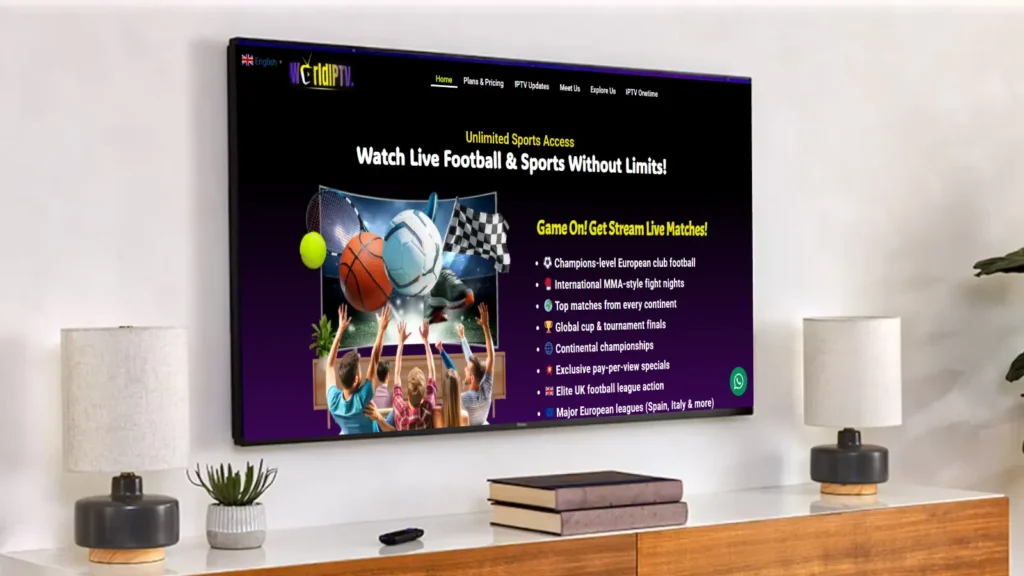
In a professional, buyer-friendly definition, World IPTV means a service that is designed to work across multiple regions and multiple device environments—and still stay predictable under normal day-to-day network variation.
That sounds simple, but “worldwide” is not the same as “identical performance everywhere.” In real networks, delivery quality is shaped by:
- routing and latency (distance + ISP paths)
- peak congestion (evenings/weekends)
- device diversity (Smart TVs, Android TV boxes, phones, tablets, PCs)
- home network quality (Wi-Fi interference, router limits, parallel usage)
- operations maturity (support, incident handling, clear onboarding)
So the best way to approach “world iptv” is not “who is best,” but:
How do I choose a worldwide IPTV plan that is stable in my environment and worth committing to over time?
If you’re using worldiptv.store as your reference ecosystem, you already have a structured path for users:
- an overview entry point: WorldIPTV homepage (high-level orientation + trust signals) WorldIPTV
- a plan hub: World IPTV Plans (durations + options) WorldIPTV
- a fundamentals page: Explore WorldIPTV (service overview and expectations) WorldIPTV
Why “world iptv” is a search intent (not a “best” ranking)
Most people type world iptv when they are trying to reduce uncertainty. They usually want one (or more) of these outcomes:
- “I travel or live abroad—will it behave consistently?”
- “I use multiple devices—will it work smoothly everywhere?”
- “I don’t want surprises—how do I choose the right plan length?”
- “I’ve had unstable streaming before—how do I avoid repeating that?”
A professional “World IPTV” guide should not answer this by listing winners or promising “everything.” That approach is fragile long-term and often drifts into risky language.
Instead, a pro guide does two things:
- Clarifies the intent behind the keyword (“world iptv” = reliability across environments)
- Transforms the intent into evaluation criteria (stability, device consistency, support maturity, plan-fit strategy)
Here’s a practical rule that keeps the content high-trust in 2026:
A good worldwide IPTV plan is not the one with the loudest claims. It’s the one that stays consistent across time, devices, and normal network stress.
World IPTV intent → professional questions (SEO table)
This table is built to rank for “world iptv” while keeping the content useful and neutral.
| Search phrase (what users type) | What they usually mean | Professional question to answer |
|---|---|---|
| world iptv | “I want worldwide reliability” | How stable is delivery across regions, devices, and peak hours? |
| world iptv plans | “Which plan should I buy?” | Which duration matches my risk tolerance and usage patterns? |
| world iptv service | “Is this trustworthy?” | Does the provider show structured onboarding, support, and clear terms? |
| world iptv subscription | “Is it worth committing?” | Should I start short (evaluation) or commit longer (proven stability)? |
| world iptv guide 2026 | “What matters today?” | What criteria matter most in 2026 (multi-device, monitoring, QoE vs uptime)? |
Why this works for SEO: it uses the main keyword and variations naturally, and it aligns content with intent (which helps ranking and reduces bounce).
What “worldwide” really changes (regions, ISPs, devices)

1) Regions change routing behavior
A worldwide service will face different ISP paths, peering arrangements, and congestion behavior depending on where the user is located. That’s why a plan that feels perfect in one country can feel inconsistent somewhere else—especially during peak hours.
2) Devices change decoding and playback behavior
Two households can have the same internet speed and still see different stability because device ecosystems differ. For example:
- Smart TV app environments behave differently than mobile playback
- Android TV boxes vary in CPU, memory, and OS updates
- some devices handle quality shifts gracefully, others “hard stop” under stress
3) Home networks are the silent bottleneck
A large percentage of “IPTV instability” complaints are actually local Wi-Fi problems: interference, distance, walls, older routers, or multiple people using the network at the same time.
That’s why professional evaluation is not “try once and decide.” It’s “test in your real environment.”
Fast pre-check: what you should know before comparing plans
Before you compare plan durations or pricing, do this quick knowledge pass. It will make your plan decision smarter and reduce refunds, churn, and frustration.
The 5 realities of World IPTV plan selection (2026)
- Speed is not the same as stability. Congestion and Wi-Fi interference can break playback even on fast connections.
- A good “first plan” is usually short. It’s a structured evaluation window, not a “cheap option.”
- Peak hours matter. Evening performance can reveal capacity stress (or local congestion).
- Device consistency matters more than a single device test. Test at least two device types if possible.
- Support clarity is a quality signal. The way onboarding and support are handled often predicts the long-term experience.
Quote (operations mindset):
“The real test isn’t when everything is perfect—it’s how the system behaves when conditions aren’t.”
Mini checklist (simple and safe)
- Test on your primary device (Smart TV or Android TV box)
- Test on a secondary device (phone/tablet/PC)
- Observe peak time behavior (evenings/weekends)
- Confirm you understand the onboarding steps and support contact paths
If you want a guided purchase flow, the WorldIPTV ecosystem already provides a structured onboarding reference via the IPTV Store Guide and the plan hub at World IPTV Plans. WorldIPTV+1
Mini case studies (realistic evaluation scenarios)
These are neutral evaluation examples (not endorsements), written to help users think professionally.
Case study A: “Stable on mobile, unstable on TV”
Scenario: A user tests World IPTV for a week. Mobile playback feels stable, but the Smart TV experience is inconsistent.
What this often indicates (professionally):
- Smart TVs and Android TV environments can differ in decoding, memory, and playback implementation.
- “Works on one device” does not guarantee “works everywhere.”
Best practice outcome:
- Choose a short plan first, validate device consistency, then commit longer when stability is proven.
Key lesson: a worldwide IPTV plan must be evaluated across the device ecosystem, not only one screen.
Case study B: “Good during the day, worse at night”
Scenario: Everything looks fine during daytime hours, but buffering or failed starts become more frequent in the evening.
What this often indicates (professionally):
- peak-hour congestion can occur at multiple points: ISP last-mile, routing, or platform load behavior
- network variability is a normal reality—worldwide services must be designed to handle it
Best practice outcome:
- Make plan decisions based on peak-hour performance, not daytime “best conditions.”
Key lesson: if a user only tests in low-traffic hours, they often overcommit to long durations too early.
2026 market signals behind “world iptv” (external sources + table)
Even if your page is not a “market report,” adding a single authority-based context section helps users understand why worldwide IPTV plan decisions have become more technical in 2026.
Why multi-device viewing increases stability expectations
In multi-screen environments, stability is no longer a “nice to have.” When households use multiple devices, the same service must behave consistently across device types and operating systems. Verified Market Research highlights technical constraints like bandwidth requirements, and notes that network congestion during peak usage periods degrades streaming quality, with added friction from ISP data caps in some regions. Verified Market Research
External reference: Verified Market Research — Multiscreen Video Market
Why monitoring and analytics matter more in 2026
Fortune Business Insights reports strong growth in the television analytics market, projecting expansion from USD 5.47B (2026) to USD 23.15B (2034) and explicitly segmenting by transmission types that include IPTV. Fortune Business Insights
The takeaway for “world iptv” buyers is simple: modern video delivery success increasingly depends on operations, monitoring, and experience measurement, not just a feature list.
External reference: Fortune Business Insights — Television Analytics Market
A safe way to include Statista (without quoting paywalled numbers)
If you want a market dashboard reference without copying paywalled figures, you can include Statista as “further reading” for OTT video market dashboards:
External reference: Statista — OTT Video (Worldwide)
Trend → what it means for World IPTV buyers (SEO table)

| 2026 trend | What the source suggests | What it means when choosing World IPTV |
|---|---|---|
| Multi-screen is normal | Multi-device ecosystems create technical complexity Verified Market Research | Test on 2+ devices before long commitments |
| Peak congestion affects quality | Congestion can degrade streaming experience Verified Market Research | Validate performance at night/weekends |
| Analytics growth is accelerating | IPTV is part of the analytics ecosystem Fortune Business Insights | Prefer providers with clear support + structured onboarding |
World IPTV 2026 a Professional Evaluation Model + Delivery Chain (QoE, Stability, Devices)
World IPTV plan decisions get much easier in 2026 when you stop judging IPTV like a “single product” and start evaluating it like a delivery system. This part explains the professional model used to judge real stability: QoE (Quality of Experience) instead of vague promises, plus a clear view of the full delivery chain (distribution → ISP → home network → device → operations). It’s written to be practical, DMCA-safe, and easy to follow.
World IPTV 2026: Why uptime alone doesn’t prove stability
A lot of “world iptv” pages talk about uptime. On the WorldIPTV plans page, for example, plan cards mention “%99.99 Uptime,” and the page also highlights “Ultra-Stable IPTV” with claims about “high-performance servers optimized to handle thousands of connections.” WorldIPTV
That said, uptime is only a baseline. A system can be “up” while users still experience:
- failed starts (it doesn’t begin playing)
- frequent buffering (rebuffer events)
- sudden quality drops (unstable bitrate)
- device-specific crashes (TV works differently than phone)
Professionals care about what the viewer actually feels over time, which is why they track QoE (Quality of Experience) signals. The practical idea is simple:
A stable World IPTV setup is not “the service is online.”
It’s “the experience is consistent across devices and peak hours.”
This matters even more for worldwide usage because conditions vary by region and by household network behavior.
QoE model for World IPTV: what to measure
Below is a professional QoE scorecard you can use during a short evaluation plan (like 1 month or 3 months). This keeps your buying decision evidence-based instead of hype-based.
QoE scorecard table (high-SEO, buyer-friendly)
| QoE signal | What it means in real life | What “good” looks like | What “warning” looks like |
|---|---|---|---|
| Start success rate | How often playback actually starts | Starts almost every time | Frequent failed starts |
| Start time | How fast it begins | Consistent start time | Much slower at night/weekends |
| Rebuffer events | Playback pauses to load | Rare or short | Frequent pauses / long pauses |
| Quality stability | Does quality jump up/down | Smooth, stable quality | Constant switching or sharp drops |
| Recovery behavior | How fast it returns after a hiccup | Recovers quickly | Requires repeated retries |
| Device consistency | Same behavior across devices | Similar results on TV + phone | Works on phone but unstable on TV |
Why this works for ranking “world iptv”: it uses the keyword context naturally while delivering real value (a scoring system). It also keeps the post DMCA-safe by focusing on infrastructure and experience.
A simple QoE “rating” method (no tools needed)
Use a 7-day log. Keep it simple:
- each day: note start success, buffering count, and device used
- do at least 2 tests during peak hours
- test at least two device types (example: Android TV + phone)
Pro tip: If you can’t explain when it fails, you can’t evaluate it professionally.
The World IPTV delivery chain: where issues really happen
Many users search “world iptv” because they want fewer interruptions. But interruptions usually come from a chain, not a single cause.
Here’s the practical chain you’re evaluating:
- Distribution / edge delivery (how streams are delivered regionally)
- ISP routing + congestion (your local internet path changes by time and location)
- Home network (router quality, Wi-Fi interference, distance, parallel usage)
- Device performance (decoding, memory, OS behavior)
- Operations + support (how issues are handled, how onboarding is communicated)
This is why professional guides avoid quick “best service” talk. The same plan can feel great in one home and inconsistent in another.
“Layer thinking” table (fast clarity)
| Layer | What can go wrong | How it shows up |
|---|---|---|
| Distribution / delivery | load stress, routing variability | slower starts, more buffering at peak |
| ISP / network path | congestion, unstable routing | time-of-day problems |
| Home network | Wi-Fi interference, weak router | “works on cable, fails on Wi-Fi” pattern |
| Device | decoding/memory limits | TV issues but phone is fine |
| Operations | unclear onboarding, slow response | confusion, repeated unresolved issues |
Patterns that reveal the real problem layer
Professional evaluation is mostly pattern recognition. You don’t need deep engineering tools to see the signals.
Pattern → likely layer (SEO table)
| Pattern you notice | Likely layer | Why it matters for plan choice |
|---|---|---|
| Worse evenings/weekends | ISP congestion or platform load | Don’t commit long before peak-hour validation |
| Only fails on Wi-Fi | Home network interference/router limits | Fix the local bottleneck first |
| Works on phone, not on TV | Device decoding / TV environment | Validate Android TV / Smart TV compatibility early |
| Random issues across all devices | delivery/operations instability | Choose shorter plan and verify support quality |
This pattern model is especially useful for worldwide IPTV plans because “worldwide” environments create more variation.
Multi-device reality: Android TV, Smart TVs, phones, PCs
In 2026, multi-device usage is normal. Your “world iptv” plan is only truly stable if it behaves consistently on the devices your home actually uses.
WorldIPTV’s own pages position the service as compatible with “Smart TVs” and “Android,” and they also mention operational aspects like instant activation and support availability. WorldIPTV+1
Now, here’s the professional reality behind device variation (simple but important):
- Smart TVs can vary a lot in performance, memory, and software support
- Android TV devices vary by hardware quality and OS updates
- Phones/tablets often handle network shifts more gracefully
- PCs depend on browser/player environment and local system load
Why device fragmentation matters (external evidence)
Verified Market Research notes that multi-screen video markets face bandwidth limitations and that network congestion during peak usage periods degrades streaming quality, and it also highlights device compatibility challenges and fragmented operating system ecosystems. Verified Market Research
That’s exactly why a “world iptv” evaluation should always include:
- at least two devices
- at least one peak-hour test
- at least a 7-day observation window
Operations and support maturity: the hidden quality signal

A big difference between “okay today” and “reliable long-term” is operations.
Look for operational maturity signals such as:
- clear onboarding steps
- transparent plan durations
- documented support channels
- consistent communication
On the WorldIPTV plans page, there are explicit references to a multilingual support team being available “24/7” and multiple contact routes. WorldIPTV
And the “Explore” page also emphasizes support availability and instant activation language. WorldIPTV+1
Why operations matter more in 2026 (external evidence)
Fortune Business Insights reports that the television analytics market is projected to grow from USD 5.47B in 2026 to USD 23.15B by 2034 (CAGR 19.77%) and highlights trends like real-time analytics and cross-platform tracking. Fortune Business Insights
You don’t need to be an analyst to benefit from this insight. It points to a clear 2026 reality:
Modern video delivery quality increasingly depends on monitoring and operational discipline, not just feature lists.
So when evaluating “world iptv,” treat the provider’s clarity and responsiveness as part of the product.
Mini case studies (evaluation in real homes)

These are neutral and practical—written to help buyers think professionally.
Case study 1: “The plan looks fine, but evenings are unstable”
Situation: Start time is fast at noon, but buffering increases at night.
What this usually means:
- peak congestion can degrade streaming quality and user experience (a known issue in multi-screen streaming environments) Verified Market Research
Professional action:
- don’t judge based on off-peak hours
- validate at peak hours before moving to long-duration plans
Takeaway: World IPTV needs to be tested in the conditions you actually live in, not the easiest conditions.
Case study 2: “Works on phone, struggles on Android TV”
Situation: Phone playback is stable, Android TV is less consistent.
What this usually means:
- device ecosystems are fragmented, and device compatibility can be challenging Verified Market Research
Professional action:
- test a second device type early in your evaluation window
- log device-specific issues instead of assuming the whole plan is bad
Takeaway: A worldwide IPTV plan should be validated on the device that matters most (usually the main TV device).
Case study 3: “No big buffering, but many failed starts”
Situation: When it starts, it plays fine—but sometimes it doesn’t start at all.
What this usually means:
- start success rate is often the strongest early indicator of reliability
- it can point to session/initialization instability or device-side environment mismatch
Professional action:
- track start success rate over 7 days
- confirm onboarding details and support responsiveness (operations maturity)
Takeaway: Stability is not just “no buffering.” Consistency is the real metric.
Quick evaluation checklist + next step
Here’s a clean evaluation checklist you can insert directly into your post (high conversion, still calm):
World IPTV evaluation checklist (7-day)
- Day 1–2: test on your main device (Smart TV or Android TV)
- Day 3–4: test on a secondary device (phone/tablet/PC)
- Day 5: test during peak hours
- Day 6: repeat peak test on the other device
- Day 7: review your QoE log (start success, buffering count, device consistency)
What to do with your results
- If QoE is stable → consider longer plan duration
- If QoE is mixed → extend evaluation (3 months is often the “real life” validation window)
- If QoE is unstable and support is unclear → avoid long commitments
For the plan and duration overview, use the internal hub: World IPTV Plans. WorldIPTV
For service fundamentals and expectations, use: Explore WorldIPTV. WorldIPTV
And for a structured buying and onboarding explanation, use: IPTV Store Guide 2026
World IPTV buyer profiles (2026)
A high-ranking world iptv page should not treat everyone the same. In practice, readers cluster into a few predictable profiles. Each profile has different risk tolerance and different “success signals.”
Here are the most common ones in 2026:
- Profile A: Home viewer (simple setup)
Wants stability on one main screen, minimal troubleshooting, and a predictable experience during peak hours. - Profile B: Multi-device household
Uses Android TV or Smart TV plus phones/tablets/PC. Needs consistent behavior across devices and wants to avoid “it works here but not there.” - Profile C: Travel / expat / multi-region user
Wants a service that remains usable across different networks and regions, where routing and ISP behavior can change. - Profile D: Small business screens
Needs predictability (opening hours), basic reliability, and clear support/onboarding. Also needs a plan duration that matches operational reality.
Quote (professional buyer mindset):
“A plan isn’t a promise. It’s an evaluation window, then a commitment—after evidence.”
World IPTV plan-fit matrix (SEO table)
This table is built to rank for world iptv and reduce buyer confusion. It focuses on duration strategy and validation logic, not content promises.
| World IPTV buyer profile | What “success” looks like | Best starting duration | When to upgrade |
|---|---|---|---|
| Home viewer (simple) | Stable starts + low buffering at night | 1 month | After a 7–14 day QoE log stays consistent |
| Multi-device household | Similar stability on TV + phone/PC | 3 months | After device consistency is confirmed over peak hours |
| Travel / expat | Stable behavior across multiple networks | 3 months | After usage in at least 2 network environments is stable |
| Small business screens | Predictable daily operation, minimal surprises | 3–6 months | After uptime/QoE patterns are consistent during operating hours |
For plan durations and pricing structure, the WorldIPTV plans page shows multiple subscription options (e.g., 1, 3, 6, 12, 24 months) and includes operational notes such as regional activation constraints for Italy and Spain. WorldIPTV
Internal next-step links (contextual):
- Plans hub: https://worldiptv.store/world-iptv-plans/ WorldIPTV
- Buying steps: https://worldiptv.store/iptv-store-guide/ WorldIPTV
Use-case 1: Home viewing (single household)
A “home viewer” world iptv buyer is usually looking for one core outcome: the experience should be boring (in a good way). No surprises, no constant adjustment, no “it worked yesterday” stories. The professional way to get that outcome is to treat the first plan as an evaluation period and test under normal household behavior.
What matters most for home viewers (2026):
- Peak-hour behavior: evenings and weekends are where instability appears first
- Start success rate: does it start reliably without repeats?
- Recovery behavior: does it recover from small network dips without manual effort?
Home viewer checklist (simple):
- Test the main TV setup at least once per day for 7 days
- Test at least two peak-hour sessions (night/weekend)
- Keep a tiny log: starts OK? buffering count? device used?
Recommended plan strategy:
- Start with 1 month if you’ve never tested the environment before. It’s the cleanest risk control.
- Upgrade only after you’ve seen consistent behavior under normal household load.
Use-case 2: Multi-device households (Android TV + phones + PC)
In 2026, multi-device isn’t “advanced”—it’s normal. That’s why “world iptv” buyers often complain about something that is not obvious at first: device fragmentation.
A setup can be stable on one device and inconsistent on another because of:
- different decoding/format handling
- different memory limits
- different playback environments
- different Wi-Fi behavior (TV location vs phone location)
WorldIPTV positions compatibility across device categories on its plans page and states compatibility with Android TV, Smart TVs, smartphones, tablets, and PCs in the same section. WorldIPTV
Multi-device “consistency table” (SEO)
| Device environment | Why it matters | What to validate first |
|---|---|---|
| Android TV / Smart TV | Main screen, long viewing sessions | Start success rate + stability over 30–60 min |
| Phone / tablet | Handles network shifts differently | Peak-hour stability + recovery speed |
| PC | Different playback stack | Start success + stability during multitasking |
Use-case 4: Small business screens (waiting room, café, office)
A small business use-case should be written carefully: the goal is predictable operation, not entertainment claims. This also keeps your page safer and more professional.
Business reality in 2026:
- reliability matters during operating hours
- staff needs simple onboarding and simple support
- consistency matters more than “features”
Business plan-fit table (SEO)
| Business scenario | Stability requirement | Recommended starting duration | Key validation window |
|---|---|---|---|
| Waiting room | “Always on” feeling | 3 months | 2 working weeks + weekend |
| Café / lounge screens | Peak-hour reliability | 3–6 months | Busy hours over multiple weeks |
| Office common area | Predictable daytime use | 3 months | Weekday consistency |
Operational maturity matters here.
The WorldIPTV plans page describes multilingual support availability “24/7” via contact form, email, or WhatsApp. WorldIPTV
Even if a business never uses support often, the availability and clarity reduce operational risk.
Plan duration vs risk level (SEO table)

| Plan duration | Best for | Risk level | What you must validate first |
|---|---|---|---|
| 1 month | First-time World IPTV buyers | Low | Device compatibility + peak-hour test |
| 3 months | Multi-device households, travel users | Medium-Low | 2 devices + 2 peak-hour windows + start success rate |
| 6 months | Home users with stable logs | Medium | Consistent QoE week-to-week |
| 12 months | Routine users who want long value | Medium-High | Stable over multiple weeks + support confidence |
| 24 months | Long-term stability seekers | High | Proven stability across seasons + zero recurring issues |
FAQ | We help you answer the most common questions
1) What does “World IPTV” mean in 2026?
It usually means a service designed for multi-region and multi-device usage, where stability and support matter more than claims.
2) How do I choose the right World IPTV plan length?
Choose based on certainty:
1 month to validate device fit + peak-hour basics
3 months to validate multi-device stability
longer only after evidence
(Use the plans hub as the clean commercial step.) WorldIPTV
3) Why does my experience differ by device (Android TV vs phone)?
4) Can I use a World IPTV subscription on multiple devices?
5) What is the most important “quality metric” for World IPTV?
Start success rate + peak-hour stability. A service that starts reliably and stays stable at busy times is usually the best “real-world quality signal.”
6) Is this page providing content access instructions?
No. This blog is about evaluation, stability, and plan selection. It avoids piracy language and does not share app sideloading steps
7) Where should I start on worldiptv.store if I’m new?
Use a structured path:
Overview: https://worldiptv.store/explore-worldiptv/ WorldIPTV
Plans: https://worldiptv.store/world-iptv-plans/ WorldIPTV
Setup/buying guide: https://worldiptv.store/iptv-store-guide/ WorldIPTV
Learning hub: https://worldiptv.store/worldwide-iptv-blogs/ WorldIP