


Choosing the best IPTV Service 2026 should involve more than comparing promotional numbers, bold quality labels or attractive subscription prices. A serious provider should give buyers enough information to understand what they are purchasing, what conditions affect performance and what assistance is available after payment.
That evidence may include clearly defined plans, supported setup environments, realistic quality expectations, visible policies, structured onboarding and an accessible support process. It should also distinguish between what the provider can control and what depends on the customer’s internet connection, device, location and home network.
This guide does not use invented rankings, anonymous reviews or unsupported comparisons with named competitors. Instead, it introduces a practical provider evidence standard that can be applied to any service. The same standard will then be used to explain why WorldIPTV can be a trusted commercial choice for buyers whose devices, connection and usage needs match its published service structure.
The best IPTV provider should not simply make the strongest promise. It should make the buying decision easier to verify.
The report evaluates providers through:
- Business and service identity
- Plan and renewal disclosures
- Device onboarding
- Quality conditions
- Monitoring and operational communication
- Support and escalation
- Refund transparency
- Copyright-aware marketing
- Long-term usability
The objective is not to suggest that one IPTV service will perform identically for every person worldwide. It is to help buyers recognize the evidence that separates a structured commercial service from a claim-heavy sales page.

What “best IPTV Service 2026” should mean before you pay
The word best is useful only when the comparison standard is clear.
For one buyer, the best provider may be the service with the simplest setup. Another may prioritize multi-device use, higher-quality viewing, responsive assistance or longer subscription value. A user relying on mobile internet may reach a different conclusion from someone using stable fixed broadband and a recently manufactured television.
This means that the best provider cannot be defined by one feature alone.
A meaningful evaluation should answer three questions:
- What does the provider claim?
- What information supports or qualifies the claim?
- Does the service structure match the buyer’s real environment?
A provider may advertise premium quality, but that statement becomes more useful when it explains the conditions affecting quality. It may advertise broad device compatibility, but buyers also need to know whether instructions and troubleshooting are available for their device category.
The strongest commercial pages help the reader move from interest to understanding and then from understanding to an appropriate plan decision.
Why IPTV provider rankings often fail
A ranking is not automatically trustworthy because it contains a table, stars or numerical scores.
A weak comparison may depend on:
- Scores without a published calculation
- Features copied from provider homepages
- Anonymous customer comments
- Unverified performance claims
- Large content totals presented as quality evidence
- Device logos without setup details
- Screenshots with no date or testing method
- Affiliate placement that is not disclosed
- Fictional performance tests
- Provider information that may no longer be current
For example, a page may award a provider 9.8 out of 10 for reliability without explaining:
- When the service was evaluated
- Which connection was used
- Which device was tested
- How long the evaluation lasted
- Which locations were included
- Whether interruptions occurred
- How the score was calculated
The decimal score creates an impression of precision, but it does not provide meaningful evidence.
This article therefore does not assign artificial ratings to the best IPTV services. It uses evidence states instead:
- Documented: Useful supporting information is available.
- Disclosed: The claim is explained, but supporting proof is limited.
- Unclear: Important information is absent, vague or contradictory.
This model is less dramatic than a top-ten ranking, but it gives buyers a clearer basis for comparison.
The difference between a claim, disclosure and proof
Commercial language exists on several levels.
| Information level | Example | Value to the buyer |
|---|---|---|
| Claim | “Premium viewing quality” | Creates interest but gives little context |
| Disclosure | “Quality depends on the connection and device” | Explains an important condition |
| Process evidence | “Setup and support follow a documented process” | Shows how the service is managed |
| Measurement evidence | A published method, period and scope | Supports a measurable performance claim |
| Limitation | “Results can vary by network and location” | Reduces false expectations |
A provider does not need to publish a technical report for every sentence. Basic statements such as available plan duration, listed price and published support channels can normally be verified directly on the website.
More specific claims require stronger support.
For example:
| Provider statement | What should accompany it |
|---|---|
| “4K available” | Device, source and connection conditions |
| “Fast activation” | A normal activation window |
| “Multi-device support” | Device and simultaneous-use conditions |
| “High uptime” | Measurement period, scope and methodology |
| “Refund available” | Eligibility, time limit and contact process |
| “Worldwide service” | Acknowledgment of regional and network variation |
A claim attracts attention. A disclosure builds understanding. Evidence builds confidence.
What this guide means by a trusted choice
A trusted choice is not necessarily a service that claims to be perfect. It is a service that makes important commercial information easier to inspect before the buyer commits.
Trust can be strengthened through:
- Consistent service information
- Clear subscription options
- Understandable renewal terms
- Visible support routes
- Realistic performance language
- Device-specific onboarding
- Accessible refund conditions
- Responsible copyright communication
- Accurate information across the website
Trust can be weakened when different pages show conflicting prices, performance percentages, device conditions or policy information.
For this reason, WorldIPTV should be presented as the best choice for a suitable buyer, not as an identical solution for every user in every country. The commercial case should be based on clarity, usability, support and plan structure rather than absolute guarantees.
The best IPTV Service 2026 evidence dossier
The provider evidence dossier is the main comparison framework used in this guide.
It organizes the information that buyers should be able to inspect before purchasing an IPTV subscription. Some parts can be verified directly from public pages. Others require the provider to explain its method, limitations or service process.
A complete evidence dossier contains eight files:
- Provider identity and accountability
- Plan, payment and renewal disclosures
- Device onboarding
- Quality and IPTV 4K evidence
- Infrastructure and service operations
- Uptime and monitoring claims
- Support and escalation
- Copyright-aware communication
The first three concern the buying and onboarding process. The remaining files will examine quality, operations, support and responsible communication.
Evidence file 1: provider identity and accountability
Before comparing technical features, buyers should know who is presenting the offer and how that seller can be contacted.
The OECD’s Recommendation on Consumer Protection in E-commerce emphasizes fair business practices, effective information disclosures, payment protections and dispute resolution in online transactions. These principles are broadly useful when evaluating an online subscription service, although local rights and obligations still depend on the applicable jurisdiction.
A provider identity file should contain:
- A consistent brand or service name
- A visible contact method
- Terms of service
- Privacy information
- A support route
- A copyright-contact process
- Seller information during checkout
- A process for commercial or billing questions
These details do not prove performance or content authorization. They establish basic accountability.
| Information | Recommended location | Why it matters |
|---|---|---|
| Provider name | Header, policies and checkout | Identifies the seller |
| Contact route | Contact and support pages | Enables pre-sale questions and escalation |
| Terms of service | Footer, plans and checkout | Explains responsibilities |
| Privacy information | Footer and checkout | Explains data handling |
| Support details | Plans, confirmation and help pages | Shows where assistance begins |
| Copyright contact | Copyright or takedown policy | Provides a notice route |
| Billing identity | Checkout and receipt | Connects payment to the seller |
Consistency is part of accountability
The information should remain consistent across:
- Homepage
- Plans page
- Checkout
- Confirmation email
- Terms
- Refund policy
- Support pages
Suppose a plans page advertises one subscription duration but checkout displays another. Even when the difference is accidental, it creates uncertainty about which terms control the purchase.
The same principle applies to:
- Device limits
- Renewal
- Activation timing
- Support availability
- Refund windows
- Quality language
A trusted provider should review these details as part of regular website maintenance.
Hypothetical case study: the invisible seller
Consider two fictional service websites.
Provider A shows an attractive offer, a large discount and a short checkout form. However, its contact details are difficult to find, its policies use a different service name and the payment confirmation does not explain where to request help.
Provider B clearly displays its service name, plan terms, support contact, refund process and confirmation steps. Its website is less aggressive, but the buyer can understand who is selling the service and what happens after payment.
Provider B has not yet proven superior picture quality. It has demonstrated stronger commercial accountability.
That distinction matters because provider evaluation should happen in stages:
Identity first, offer second, performance third.
Evidence file 2: plan, payment and renewal disclosures
The next evidence file concerns what the buyer is actually purchasing.
A plan should not be defined only by a large duration label and a price. Buyers also need to understand the commercial conditions connected to that duration.
Relevant information includes:
- Subscription length
- Total amount
- Displayed currency
- Renewal method
- Activation expectations
- Supported usage conditions
- Refund eligibility
- Cancellation procedure
- Support inclusion
- Any automatic or recurring payment
The FTC’s online-shopping guidance advises consumers to examine seller information, refund policies and the complete conditions of an online purchase. This is US consumer guidance rather than worldwide law, but the underlying purchasing practice is useful internationally: read the terms before paying and retain records of the transaction.
The minimum plan disclosure table
| Plan element | Question the page should answer |
|---|---|
| Duration | When does access begin and end? |
| Price | What is the complete amount? |
| Currency | Which currency is used at checkout? |
| Renewal | Is it manual or automatic? |
| Activation | What is the normal delivery window? |
| Devices | What device or connection conditions apply? |
| Support | Which assistance is included? |
| Refund | Who qualifies, and how is a request made? |
| Cancellation | What action is required from the buyer? |
“Instant activation” needs a boundary
The phrase instant activation can be useful, but it should not suggest that every transaction will complete at exactly the same speed.
Potential variables include:
- Payment verification
- Incorrect customer details
- Manual review
- Email delivery delays
- Account provisioning
- Temporary technical issues
A clearer statement would be:
“Activation is normally processed promptly after successful payment. Timing may vary when verification or technical review is required.”
This preserves commercial appeal without creating an absolute promise.
“Money-back” needs a written procedure
A refund badge is not a complete refund policy.
A useful policy should explain:
- Eligibility period
- Conditions that exclude a request
- Information the customer must provide
- Where the request should be sent
- Whether troubleshooting is required
- How approved refunds are processed
- Whether processing time may vary
The objective is not to make every transaction refundable under every condition. It is to make the actual policy understandable before checkout.
“Multi-device” needs a precise meaning
The term can refer to several different things:
- The service can be installed on different device categories.
- One account can be moved between devices.
- Multiple devices can remain configured.
- Multiple devices can stream simultaneously.
- A particular plan includes more than one active connection.
These meanings are not interchangeable.
A plan page should not allow a buyer to assume that broad device compatibility automatically includes unlimited simultaneous use.
Commercial example: two plans at the same price
Imagine that two fictional plans both cost the same amount.
| Plan detail | Plan A | Plan B |
|---|---|---|
| Duration | Clearly stated | Clearly stated |
| Renewal | Not explained | Manual renewal explained |
| Activation | “Instant” only | Normal window and exceptions explained |
| Devices | “All devices” | Supported categories and conditions |
| Refund | Badge only | Eligibility and process published |
| Support | “24/7” | Contact route and issue process |
| Buyer certainty | Low | Higher |
Plan B does not necessarily deliver better technical performance. It creates a stronger pre-purchase experience because the buyer can understand the conditions.
This is one reason the best IPTV Service 2026 should be judged through more than price.
Evidence file 3: device onboarding
A device logo is not an onboarding process.
A provider may be technically compatible with a wide range of televisions, mobile devices, computers and external receivers. However, buyers also need to know how the service is activated in the environment they actually use.
Device onboarding has three levels.
| Level | Meaning | What the buyer receives |
|---|---|---|
| Compatible | The service may work in the environment | Basic compatibility statement |
| Documented | A setup path is published | Installation and activation steps |
| Supported | Assistance is available for that path | Documentation plus troubleshooting |
The third level creates the strongest commercial value.
A supported setup path may explain:
- Which device categories are commonly used
- Whether a separate application is required
- How account information is delivered
- Which details must be entered
- Whether an external device may be preferable
- What limitations affect older hardware
- How to perform the first test
- What information support requires
Why “works on all devices” is incomplete
No provider controls every device model, software version, application update or regional application store.
Even within the same device category, performance may change because of:
- Operating-system version
- Available memory
- Processor capability
- Application compatibility
- Storage limitations
- Network hardware
- Device age
- Manufacturer support
A more credible statement would be:
“WorldIPTV supports common television, mobile and computer environments through documented setup options. Availability and performance can vary by device, application and network.”
This still positions WorldIPTV commercially. It also gives the reader a realistic condition.
What buyers should know before selecting a device path
A useful onboarding page should answer:
- What is the primary device?
- Can the required application be installed?
- Is a direct television setup practical?
- Would an external device provide a better experience?
- Does the device support the desired quality?
- Is the connection wired or wireless?
- What happens when activation fails?
- Can support assist with that exact setup category?
Hypothetical case study: compatible but unsupported
A buyer owns an older connected television. The provider’s homepage includes a general television icon, so the buyer assumes that installation will be simple.
After purchasing, the buyer discovers that:
- The recommended application is unavailable.
- The television no longer receives major software updates.
- The remote-control interface is difficult to use.
- No alternative setup path was explained.
The service may still work through an external device, but the buyer was not prepared for that requirement.
A better onboarding process would have asked for the device environment before purchase and explained the available alternatives.
Compatibility answers “Can this work?” Onboarding answers “How will the buyer make it work?”
A device-onboarding evidence card
| Provider information | Weak version | Stronger version |
|---|---|---|
| Device support | “All devices” | Supported categories with conditions |
| Application | Unnamed or unexplained | Clear application requirement |
| Activation | Credentials only | Ordered activation steps |
| Older devices | No warning | Practical limitations explained |
| External hardware | Mentioned after purchase | Presented as an alternative beforehand |
| Troubleshooting | “Contact support” | Details support needs from the user |
| Simultaneous use | Assumed from device compatibility | Clearly separated from installation support |
WorldIPTV can strengthen its best-provider positioning by making this information visible before payment, not only after a buyer asks for help.
A structured onboarding system provides several benefits:
- Buyers choose more suitable plans.
- Installation errors decrease.
- Support receives better information.
- Quality expectations become more realistic.
- The provider appears more professionally organized.
- Customers are more likely to complete activation successfully.
The next part of this guide will examine the evidence behind IPTV 4K, infrastructure, monitoring, uptime, support and copyright-aware communication.

Evidence file 4: quality and IPTV 4K evidence
Picture quality is one of the most visible selling points in the IPTV market, but it is also one of the easiest claims to misunderstand.
A provider may advertise:
- HD quality
- Full HD quality
- IPTV 4K
- Ultra-high-definition viewing
- Smooth streaming
- Adaptive quality
These terms describe possible service capabilities. They do not prove that every buyer will receive the same result on every device, connection or viewing session.
The final viewing experience depends on a complete delivery chain:
Source quality → encoding → delivery infrastructure → internet route → home network → application → device → display
A weakness at any stage can reduce the final result.
For example, a 4K-capable television cannot create genuine 4K detail when the original source is lower resolution. A fast internet package may still produce interruptions when the home Wi-Fi signal is weak. A modern application may perform poorly on a device with limited memory or processing power.
This is why the best IPTV Service 2026 should explain quality as a set of conditions, not as a permanent guarantee.
Resolution availability is not the same as experienced quality
Resolution describes how many pixels are available in the image. Experienced quality describes how the stream behaves while the viewer is actually using it.
Experienced quality can be affected by:
- Compression level
- Bitrate
- Startup delay
- Playback interruptions
- Sudden resolution changes
- Frame loss
- Device decoding ability
- Application stability
- Local network congestion
- Display settings
The ITU-T P.1204 recommendation covers video-quality assessment for streaming services at resolutions up to 4K. Its existence supports an important buyer principle: streaming quality can be studied through structured assessment models rather than judged only from a 4K badge.
This does not mean that every provider uses this specific standard. It means quality is more complex and measurable than a marketing label suggests.
What a responsible IPTV 4K statement should explain
A useful IPTV 4K disclosure may clarify:
- Whether 4K options are available
- Whether availability varies by content or category
- Which device capabilities are required
- Whether the application supports the necessary format
- What network conditions are recommended
- Whether quality can adapt when bandwidth changes
- Whether results vary by location or route
- Whether the provider guarantees availability or only supports it under suitable conditions
A statement such as:
“4K options are available on supported devices and suitable connections, while actual quality may vary according to the source, network and device.”
is more credible than:
“Guaranteed permanent 4K on every device.”
The first statement explains the service while acknowledging technical reality. The second makes an absolute promise that no provider can fully control.
IPTV quality claim-to-evidence table
| Provider statement | Evidence or clarification needed |
|---|---|
| “4K available” | Device, source and connection conditions |
| “Ultra HD quality” | Whether it describes availability or guaranteed output |
| “No buffering” | Replace with realistic stability language |
| “High performance” | Explanation of infrastructure, monitoring or process |
| “Works on all devices” | Supported device categories and limitations |
| “Adaptive quality” | How quality may change under different conditions |
| “Smooth worldwide streaming” | Regional, routing and network qualifications |
Quality evidence states
The evidence-state model can also be applied to IPTV 4K.
Documented
The provider clearly describes:
- Supported device categories
- Quality conditions
- Network dependence
- Setup path
- Important limitations
Disclosed
The provider states that 4K is available and notes that performance may vary, but offers limited technical explanation.
Unclear
The provider promises guaranteed 4K, permanent quality or zero interruption without explaining the conditions.
A buyer does not always need laboratory evidence. However, the provider should at least publish enough information to prevent a resolution label from becoming misleading.
Illustrative case study: a fast connection with poor results
The following example is hypothetical.
A buyer has a high-speed fixed broadband package and a modern 4K television. The buyer assumes that this guarantees 4K performance.
During evening viewing, quality changes frequently and playback sometimes pauses.
Further review shows that:
- The television is connected through weak Wi-Fi.
- Several household devices are downloading files.
- The application has not been updated.
- The source is not always available in 4K.
- The router is located in another room.
The provider may still need to investigate its own delivery performance, but the buyer’s advertised broadband speed alone does not identify the cause.
A responsible support process would examine the complete chain instead of making one of two weak assumptions:
- “The provider can never be responsible.”
- “The provider is always responsible.”
Strong quality support separates possible causes before offering a conclusion.
Evidence file 5: infrastructure and service operations
An IPTV subscription is not only a login, an application and a payment page. It depends on systems that must be managed over time.
The customer may never see the infrastructure directly, but its operation can affect:
- Activation
- Account access
- Playback
- Quality consistency
- Service recovery
- Peak-hour capacity
- Multi-device use
- Support accuracy
The ITU-T H.705.3 recommendation provides requirements and architecture context for an open IPTV multicast service. It should not be treated as proof that a commercial provider follows that standard. However, it demonstrates that IPTV delivery can involve defined components, functions and operational responsibilities.
For buyers, the practical lesson is simple:
A provider should be evaluated not only by what it sells, but by how the service is operated.
Operational areas behind a professional IPTV service
A provider may manage several operational areas:
- Capacity planning
Preparing infrastructure for normal and peak usage. - Service monitoring
Watching important systems for errors, degradation or unusual behavior. - Account provisioning
Creating, updating and maintaining customer access. - Incident identification
Determining whether a problem affects one user, one region or a larger group. - Maintenance management
Performing updates, repairs or improvements. - Service recovery
Restoring affected functions after a disruption. - Support escalation
Moving unresolved issues to the appropriate technical level. - Scalability
Expanding capacity and processes as usage changes.
A provider does not need to reveal confidential architecture, server addresses or security controls. It should communicate enough to show that reliability is treated as a managed process.
What buyers can reasonably inspect
Most buyers cannot audit private infrastructure. They can still look for public operational signals.
| Operational area | Public signal buyers may inspect |
|---|---|
| Monitoring | Qualified statement that service health is monitored |
| Maintenance | Explanation that planned work may occur |
| Incidents | Process for reporting wider service problems |
| Capacity | Realistic language about performance and demand |
| Recovery | Support or communication process during problems |
| Provisioning | Clear activation and account-delivery expectations |
| Escalation | Support route for unresolved technical issues |
| Communication | Updates when a known issue affects service |
These signals are not complete proof of performance. They help the buyer distinguish a managed service from a page that only presents promotional claims.
Infrastructure language that builds trust
Commercial language can remain persuasive without revealing sensitive information.
A credible statement might say:
“The service is supported by monitoring, capacity management and a structured incident-handling process. User results can still vary according to connection, device and location.”
This communicates operational intent while preserving realistic limits.
A weaker statement would say:
“Our servers guarantee perfect worldwide performance forever.”
The second statement is stronger in tone but weaker in trust because it cannot account for every route, network, device or service event.
Illustrative case study: growth without capacity planning
Imagine a fictional provider that experiences rapid customer growth.
At first, the service performs well. As usage increases, the provider does not review capacity, monitor peak demand or improve its incident process.
Customers begin reporting:
- Slower activation
- More evening interruptions
- Longer support delays
- Inconsistent quality
- Repeated account issues
The provider continues advertising the same reliability message because its website has not changed.
The problem is not simply that demand increased. The problem is that the operational system did not mature with the customer base.
A strong IPTV 2026 provider should therefore treat scalability as more than a sales word. It should mean that infrastructure, support and account management can adapt as usage changes.
Evidence file 6: uptime and monitoring claims
Uptime is often shown as a percentage because it appears simple and objective.
Examples may include:
- 98% uptime
- 99.9% uptime
- 99.99% uptime
- 100% availability
However, the number has limited value unless the provider explains how it was calculated.
An uptime claim should answer seven questions:
- What period was measured?
- Which systems were included?
- Which monitoring method was used?
- Was planned maintenance excluded?
- Did degraded service count as downtime?
- Which locations or regions were covered?
- Was the figure measured internally or independently?
Without those details, the percentage is primarily a marketing number.
Why small percentage differences can be misleading
A buyer may assume that 99.99% is automatically superior to 99.9%.
That conclusion is unreliable when:
- The providers measured different systems.
- One excluded maintenance and the other included it.
- One measured a short period.
- One measured only a login page.
- One measured infrastructure availability rather than the user experience.
- Neither published a methodology.
A precise number can create false confidence when its meaning is undefined.
Uptime evidence table
| Uptime element | Useful disclosure |
|---|---|
| Measurement period | Previous month, quarter or year |
| System scope | Login, account, delivery and support systems |
| Monitoring source | Internal or independent |
| Maintenance treatment | Included or excluded |
| Degraded service | Whether partial failure counts |
| Geographic scope | Global, regional or selected locations |
| Publication date | When the metric was updated |
Stronger alternatives when a percentage is unavailable
A provider does not need to publish an exact uptime figure when it cannot support one properly.
It may instead explain:
- That important systems are monitored
- That maintenance may occasionally occur
- That support investigates service-wide incidents
- That performance depends partly on external networks
- That exact results vary by device and location
- That known issues are escalated through a defined process
This language is less visually impressive than 99.99%, but it can be more trustworthy.
An unexplained percentage is weaker than a clear operating process.
What monitoring should and should not imply
Monitoring can help a provider:
- Detect errors
- Identify unusual usage patterns
- Observe system availability
- Compare normal and peak behavior
- Recognize regional incidents
- Confirm recovery
Monitoring cannot guarantee:
- That every household Wi-Fi network works correctly
- That every device application remains stable
- That every internet route is uncongested
- That no interruption will ever occur
- That all user-side problems can be detected automatically
The best IPTV services explain this boundary instead of treating monitoring as a guarantee of perfection.
Evidence file 7: support and escalation
Support should not be judged only by whether the page displays “24/7.”
That phrase may refer to:
- A contact form available at all times
- Automated messages
- Staff availability
- Technical monitoring
- A messaging channel
- A target rather than a guarantee
A stronger provider explains the actual support process.
What useful support information includes
Buyers should be able to identify:
- Available contact methods
- Normal support availability
- Information needed when reporting a problem
- Whether setup assistance is included
- How billing questions are handled
- How wider incidents are recognized
- Whether unresolved issues can be escalated
- What support cannot control
Support quality is not simply response speed. A fast but irrelevant reply may be less helpful than a structured response that identifies the likely cause.
The five levels of IPTV support
| Support level | Description |
|---|---|
| Contact available | The user can submit a message |
| Response provided | A representative replies |
| Issue classified | The problem is categorized |
| Troubleshooting performed | Relevant checks are completed |
| Escalation completed | Unresolved issues reach the correct team |
A provider that advertises strong support should aim to move beyond the first two levels.
A structured troubleshooting sequence
A useful support interaction may ask:
- Which device is affected?
- Which application is being used?
- When did the problem begin?
- Is the connection wired or wireless?
- Does the issue affect every quality level?
- Does it occur on another supported device?
- Does it happen at a particular time?
- Are other household services affected?
- Has the application or device recently updated?
- Is there a known wider incident?
This process creates useful information.
It also helps prevent two common support failures:
- Automatically blaming the customer
- Automatically promising that the provider can correct every issue
Illustrative case study: fast reply versus useful support
A customer reports repeated evening interruptions.
Provider A
The response arrives in two minutes:
“Restart your router.”
No additional information is requested.
Provider B
The response arrives later but asks:
- Which device is affected?
- Whether the issue occurs on Wi-Fi and cable
- Whether another quality level behaves differently
- Whether the issue affects another device
- The approximate time of each interruption
Provider A responded faster. Provider B created a better diagnostic path.
The best IPTV Service 2026 should therefore describe support through:
- Accessibility
- Relevance
- Troubleshooting quality
- Escalation
- Communication
not only through a response-time slogan.
Support claim-to-disclosure matrix
| Support claim | Useful supporting information |
|---|---|
| “24/7 support” | Channel, coverage and expected availability |
| “Fast response” | Normal expectation without an absolute guarantee |
| “Technical assistance” | Types of setup and service issues covered |
| “Expert team” | Process or scope of assistance |
| “Priority support” | How it differs from standard support |
| “Worldwide support” | Languages, channels or practical limitations |
WorldIPTV can build a strong commercial advantage here by publishing a clear path from first contact to escalation.
Evidence file 8: copyright-aware communication
A trustworthy IPTV provider should communicate responsibly about digital content.
The WIPO copyright FAQ explains general copyright principles and notes that films, computer programs, written works and other creative material may be protected. Copyright and licensing rules can vary according to territory and applicable law.
Online availability does not automatically prove that content is authorized for every use or location.
For this reason, an IPTV provider should avoid using unsupported legal claims as a marketing shortcut.
Copyright-aware communication includes
- A copyright or takedown contact
- A process for rights-holder notices
- Terms against misuse
- Original marketing imagery
- No copied broadcaster logos
- No protected program artwork
- No bypass instructions
- No universal licensing statements without proof
- No promises involving protected events or services
What a copyright policy proves
A copyright policy can demonstrate that:
- A notice process exists.
- Rights holders have a contact route.
- The website states its intended procedure.
- Users are informed about responsible conduct.
It does not automatically prove:
- Authorization for every item
- Licensing in every territory
- Compliance with every local law
- That every third-party source is authorized
- That the entire service is legal worldwide
This distinction should be stated clearly.
Copyright trust matrix
| Trust signal | What it demonstrates | What it does not prove |
|---|---|---|
| Copyright contact | A notice route exists | Rights to every item |
| Takedown procedure | Complaints can be reviewed | Universal licensing |
| Original graphics | Safer marketing practice | Content authorization |
| Terms against misuse | User responsibilities are stated | Compliance by every user |
| Qualified legal wording | More responsible communication | Identical law worldwide |
| No bypass instructions | Lower misuse risk | Complete legal certification |
Commercial benefit of DMCA-safe communication
DMCA-safe and copyright-aware marketing can improve more than compliance.
It can also:
- Reduce trademark and copyright complaints
- Make the website appear more professional
- Avoid misleading affiliation claims
- Improve consistency between commercial and policy pages
- Reduce dependence on copyrighted promotional imagery
- Build a clearer brand identity
- Support long-term search trust
WorldIPTV should focus its marketing on:
- Service structure
- Devices
- Onboarding
- Quality conditions
- Support
- Plan clarity
- Infrastructure
- Long-term usability
These strengths can be promoted without relying on protected names, logos or artwork.
A professional IPTV brand should be recognizable through its own service and design—not through borrowed entertainment brands.
Worldwide provider claims require local context
A provider may serve buyers in multiple countries, but worldwide availability does not mean identical performance everywhere.
The International Telecommunication Union’s Facts and Figures 2025 estimated that around 74% of the global population was online in 2025. The report also showed important differences between regions, income levels and urban and rural populations.
This evidence should not be used to estimate the number of IPTV subscribers. Its relevance is that online users connect under very different conditions.
A worldwide buyer may depend on:
- Fiber broadband
- Cable broadband
- Mobile internet
- Fixed wireless access
- Shared household Wi-Fi
- A limited data plan
- Older networking equipment
- Rural infrastructure
- Congested urban networks
The provider should therefore qualify global performance claims.
Internet access is global, but conditions are not equal
Two households may purchase the same subscription and receive different results.
Household A
- Stable fixed connection
- Recent router
- Wired television
- Modern device
- Low household congestion
Household B
- Mobile hotspot
- Weak indoor signal
- Older television
- Several connected users
- Strict monthly data allowance
The provider may offer the same account structure to both households, but the user experience can differ significantly.
This does not mean a worldwide service is weak. It means worldwide positioning should include realistic local context.
Connected-TV environments are fragmented
Ofcom’s Media Nations 2025 research provides a UK example of the continuing movement toward online video and connected-TV environments.
It is a regional example, not global proof.
However, it demonstrates why providers increasingly need to account for:
- Native television applications
- External television devices
- Mobile-to-screen setups
- Different operating systems
- Device updates
- Application availability
- Remote-control usability
A single “Smart TV compatible” label cannot explain all these environments.
Better alternatives to “works everywhere”
A provider can preserve a strong worldwide commercial position with accurate wording.
Recommended language:
- “Available across supported device environments.”
- “Worldwide users may experience different network conditions.”
- “Setup guidance is available for common device categories.”
- “Performance depends on the connection, device and location.”
- “Higher-resolution viewing requires a suitable complete environment.”
- “Support can assist with supported setup paths.”
Avoid:
- “Perfect performance everywhere”
- “Works 100% in every country”
- “No buffering worldwide”
- “Guaranteed 4K on all devices”
- “Identical performance for every user”
Qualified wording is not weak wording. It demonstrates that the provider understands the market it serves.
How to compare the best IPTV services without fake rankings
Comparing the best IPTV services does not require a top-ten table or an artificial score.
A more reliable method compares the quality of the published evidence.
Evidence-rich provider versus claim-heavy provider
| Evaluation area | Evidence-rich provider | Claim-heavy provider |
|---|---|---|
| Provider identity | Seller and contact information are consistent | Identity is unclear |
| Plans | Duration, price and terms are visible | Price shown without conditions |
| Renewal | Method is explained | Renewal is discovered later |
| Quality | Conditions and limitations are stated | Permanent quality guarantees |
| Devices | Supported setup paths are documented | Device logos only |
| Support | Contact and issue process are visible | “24/7” without explanation |
| Refunds | Eligibility and process are published | Badge without policy |
| Monitoring | Scope is described carefully | Unsupported uptime percentage |
| Copyright | Responsible policy language | Protected names used for promotion |
| Worldwide use | Regional variation is acknowledged | Identical performance is promised |
This table does not prove that the evidence-rich provider will always outperform the claim-heavy provider. It shows which provider makes the commercial decision easier to understand.
Use evidence states instead of artificial scores
The following states can be applied to every important claim.
Documented
The provider publishes information that a buyer can inspect.
Example:
- Plan duration and renewal are clearly stated.
- Support contact is visible.
- Refund eligibility is explained.
Disclosed
The provider explains the claim but provides limited evidence.
Example:
- Monitoring is mentioned, but the measured scope is not published.
- 4K is available, but detailed device conditions are limited.
Unclear
The provider’s information is missing, inconsistent or too absolute.
Example:
- One page shows a different uptime percentage from another.
- “All devices” is advertised without setup details.
- A refund badge appears without written terms.
Provider comparison worksheet
| Evidence category | Documented | Disclosed | Unclear |
|---|---|---|---|
| Provider identity | |||
| Plan duration | |||
| Renewal | |||
| Refund terms | |||
| Device support | |||
| IPTV 4K conditions | |||
| Monitoring | |||
| Support process | |||
| Worldwide limitations | |||
| Copyright communication |
The purpose is not to count boxes and automatically declare a winner. Some categories may matter more to a particular buyer.
For example:
- A first-time buyer may prioritize onboarding and support.
- A long-term buyer may prioritize renewal and plan clarity.
- A 4K household may prioritize device and quality conditions.
- A mobile-first buyer may prioritize adaptive quality and network guidance.
- A multi-device household may prioritize usage conditions.
What cannot be compared fairly
Avoid comparing providers through information that cannot be independently confirmed.
This includes:
- Unverified uptime figures
- Anonymous customer reviews
- Unconfirmed subscriber numbers
- Claimed catalog totals
- Copied screenshots
- Fictional tests
- Old pricing
- Competitor information that may have changed
- Unsupported “number one” statements
A provider comparison becomes weaker when it pretends uncertainty does not exist.
The safer editorial approach is:
Compare public evidence, explain its limits and avoid presenting assumptions as test results.
Hypothetical comparison: provider evidence states
| Category | Provider A | Provider B |
|---|---|---|
| Plan terms | Documented | Disclosed |
| Device onboarding | Unclear | Documented |
| Quality conditions | Unclear | Disclosed |
| Monitoring | Claimed only | Process described |
| Support | Contact available | Contact and escalation described |
| Refund policy | Badge only | Written eligibility |
| Copyright communication | Unclear | Policy and contact available |
Provider B presents a stronger evidence profile.
This does not prove that it will be perfect for every buyer. It shows that the buyer can make a more informed decision before payment.
The next part will apply this same standard directly to WorldIPTV, explain why it can be a strong choice for the right buyer and provide a clear evidence-to-purchase path.
Applying the provider evidence standard to WorldIPTV
The evidence standard used throughout this guide should apply equally to WorldIPTV. A brand cannot build lasting trust by asking buyers to ignore the same questions it recommends asking elsewhere.
WorldIPTV should therefore be evaluated through information that can be inspected before payment, including:
- Plan duration and pricing
- Renewal conditions
- Supported setup categories
- Activation expectations
- IPTV 4K conditions
- Support routes
- Refund eligibility
- Service limitations
- Copyright-contact information
- Monitoring and operational communication
This creates a stronger commercial position than simply declaring WorldIPTV the best IPTV Service 2026 without showing why.
A trustworthy brand should make important information visible before the customer needs to ask for it.
What WorldIPTV should make verifiable before payment
The following information should be easy to locate across the WorldIPTV website.
| WorldIPTV information | What the buyer should be able to verify |
|---|---|
| Plan duration | How long the selected subscription remains active |
| Price | The complete amount and currency |
| Renewal | Whether renewal is manual or automatic |
| Activation | What normally happens after successful payment |
| Devices | Which setup categories are supported |
| Multi-device use | Whether installation and simultaneous use are different |
| Quality | Which conditions affect HD and IPTV 4K availability |
| Support | Where help can be requested |
| Refunds | Eligibility, time limit and request process |
| Copyright | Where rights holders can submit a notice |
The goal is not to fill every page with legal or technical text. The goal is to make the buying process understandable.
A visitor should not have to search through several pages to discover whether:
- The plan renews automatically
- Multiple simultaneous connections are included
- Support is available for the selected device
- Activation may require verification
- Refunds depend on specific conditions
- IPTV 4K varies by source, device or network
The WorldIPTV proof panel
A branded proof panel can present WorldIPTV’s main commercial strengths without relying on exaggerated claims.
| WorldIPTV area | Information to publish | Buyer benefit |
|---|---|---|
| Plan structure | Duration, price and renewal | Easier comparison |
| Onboarding | Post-payment and activation steps | Less uncertainty |
| Device setup | Supported categories and limitations | Better device fit |
| Quality | Availability and viewing conditions | Realistic expectations |
| Support | Contact and escalation route | Clear assistance path |
| Policies | Terms, privacy and refund details | Greater purchase clarity |
| Operations | Qualified monitoring explanation | More credible reliability positioning |
| Copyright | Notice process and responsible-use terms | Safer communication |
This panel can be included on the plans page, trust page or within a detailed buyer guide.
It should be updated whenever the service structure changes.
Claims WorldIPTV can use when accurate
WorldIPTV can use strong commercial language when the statements accurately reflect the service.
Appropriate examples include:
- Clear subscription durations
- Flexible plan options
- Setup assistance for supported environments
- Published support channels
- Multi-device setup options
- Quality choices under suitable conditions
- Worldwide customer focus
- Structured onboarding
- Long-term subscription options
- Monitoring and incident-management practices
These statements remain persuasive because they describe the service rather than promising a perfect result.
Claims requiring supporting documentation
Some claims require a stronger evidence layer.
| Claim | Supporting information required |
|---|---|
| Exact uptime percentage | Period, scope, method and maintenance treatment |
| Guaranteed support response | Defined service level and measurement process |
| Independent reliability | Name and method of the independent evaluator |
| Universal compatibility | Complete device coverage and limitations |
| Guaranteed IPTV 4K | Source, device, network and measurement conditions |
| Unlimited simultaneous use | Exact plan and connection terms |
| Worldwide authorization | Documented rights and territorial scope |
| Identical global performance | Evidence across all relevant locations |
When the supporting evidence is unavailable, qualified wording is safer and more credible.
For example:
Avoid:
WorldIPTV guarantees perfect 4K performance on every device worldwide.
Use:
WorldIPTV offers higher-quality viewing options for supported setups, while actual performance depends on the source, device, application and network environment.
The second version still presents a commercial benefit. It also respects the technical limits described earlier.
Illustrative case study: improving a WorldIPTV plan page
Consider a hypothetical version of a plan page that contains:
- A subscription price
- A large 4K badge
- A multi-device icon
- A support icon
- A purchase button
The page looks attractive but leaves important questions unanswered.
An improved version would add:
- The exact plan duration
- Whether renewal is manual
- The normal activation process
- Supported device categories
- A distinction between installation and simultaneous connections
- IPTV 4K conditions
- A support route
- Refund eligibility
- A link to terms and privacy information
The stronger page may contain slightly more text, but it gives buyers more confidence to proceed.
That is the commercial advantage of evidence-first positioning:
Better disclosure does not reduce conversion. It can remove uncertainty that prevents conversion.
Why WorldIPTV can be the best choice for the right buyer
WorldIPTV can be positioned as a strong choice when its service structure matches what the buyer values.
Those priorities may include:
- Understandable plan options
- Guided activation
- Support for common device environments
- Realistic quality communication
- Multi-device usability
- Accessible assistance
- Long-term subscription value
- Clear commercial policies
The phrase for the right buyer is important.
No provider can responsibly claim to be perfect for every:
- Country
- Connection type
- Television model
- Application
- Household
- Budget
- Quality expectation
A stronger recommendation explains which buyers are most likely to benefit.
A structured route from research to purchase
WorldIPTV can stand out by giving users a clear progression.
Stage 1: Understand the service
The buyer first learns:
- What the plans offer
- Which conditions affect performance
- How device setup works
- Which support channels exist
Stage 2: Match the service to the environment
The buyer compares the offer with:
- Primary device
- Internet connection
- Desired quality
- Household use
- Support needs
- Expected subscription duration
Stage 3: Review the commercial terms
The buyer confirms:
- Price
- Duration
- Renewal
- Refund conditions
- Activation expectations
Stage 4: Complete onboarding
After payment, the buyer receives:
- Confirmation
- Activation information
- Setup instructions
- Support details
Buyers new to the service can use the WorldIPTV plan-selection guide to connect the evidence framework with their expected use.
That supporting guide should handle detailed buyer and plan matching, while this article remains focused on provider proof and trust.
Clear plan structure and value over time
The best choice is not always the shortest, longest or cheapest plan.
A useful WorldIPTV plan structure should help buyers compare:
| Plan consideration | Why it matters |
|---|---|
| Duration | Determines the commitment period |
| Total price | Shows the complete cost |
| Renewal | Prevents unexpected continuation |
| Setup support | Reduces activation friction |
| Device conditions | Prevents compatibility assumptions |
| Quality availability | Matches expectations with the setup |
| Refund terms | Explains available remedies |
| Long-term usability | Helps buyers compare value beyond price |
For buyers who prioritize budget, the separate guide can help them evaluate affordable IPTV value without turning this page into another cheap-versus-premium comparison.
Onboarding rather than credentials alone
A weak onboarding experience delivers account details without explaining what to do next.
A structured WorldIPTV onboarding experience should include:
- Order confirmation
- Plan and duration confirmation
- Activation expectations
- Recommended setup path
- Required account information
- First connection instructions
- Support contact
- Basic troubleshooting guidance
This process matters because a valid account can still produce a poor customer experience when the buyer does not understand the installation path.
A strong onboarding message should be:
- Short
- Ordered
- Device-relevant
- Easy to save
- Easy to follow
- Linked to further help
Multi-device positioning with realistic conditions
Multi-device support can be a meaningful WorldIPTV benefit, but it should be defined clearly.
There is a difference between:
- Installing the service on different device categories
- Moving an account between devices
- Keeping several devices configured
- Using several devices at the same time
These conditions should not be grouped under one vague phrase.
A practical disclosure might say:
“WorldIPTV supports setup across common device categories. Simultaneous-use conditions depend on the selected plan.”
This statement is commercially useful and reduces the risk of misunderstanding.
Infrastructure, monitoring and support
WorldIPTV can also position itself around business-grade operating principles.
Those principles may include:
- Monitoring important service systems
- Reviewing capacity
- Maintaining account-provisioning processes
- Identifying wider incidents
- Escalating unresolved cases
- Communicating known issues
- Supporting long-term service usability
The article should not invent:
- Server locations
- Monitoring tools
- Capacity figures
- Support response guarantees
- Independent certifications
Only verified operational information should be published.
Why this creates a stronger best-provider case
WorldIPTV does not need to win an invented scorecard or attack named competitors.
A stronger case is built by showing that the brand provides:
- A clear offer
- A visible plan structure
- A defined activation path
- Supported setup options
- Accessible assistance
- Realistic service conditions
- Responsible commercial communication
WorldIPTV stands out when it gives buyers more than sales language: a clear plan structure, a defined onboarding path, visible support and realistic service conditions.
A WorldIPTV evidence-to-purchase path
The transactional part of this guide begins only after the buyer has reviewed the evidence.
This prevents the article from pushing readers directly from a headline to checkout.
Stage 1: Verify the evidence
Before selecting a plan, inspect:
- Provider identity
- Plan duration
- Renewal
- Device conditions
- IPTV 4K wording
- Support access
- Refund policy
- Copyright information
- Service limitations
Use the evidence states:
- Documented
- Disclosed
- Unclear
Important unclear information should be resolved before payment.
Stage 2: Match WorldIPTV to the buyer
The buyer should record the intended environment.
| Buyer factor | Example |
|---|---|
| Primary device | Recent connected television |
| Connection | Fixed broadband |
| Home network | Wi-Fi |
| Desired quality | HD and occasional 4K |
| Household use | Two active viewers |
| Support need | Setup assistance |
| Preferred duration | Medium or long term |
| Main priority | Reliability and usability |
This profile can then be compared with the published plan conditions.
Stage 3: Compare the plan options
Readers who have completed the evidence check can compare available World IPTV plans.
When comparing plans, review:
- Total price
- Duration
- Renewal
- Device conditions
- Simultaneous-use conditions
- Support access
- Quality availability
- Refund eligibility
Do not select a plan based only on the largest discount.
A discount has value only when the underlying service suits the buyer.
Stage 4: Complete subscription and onboarding
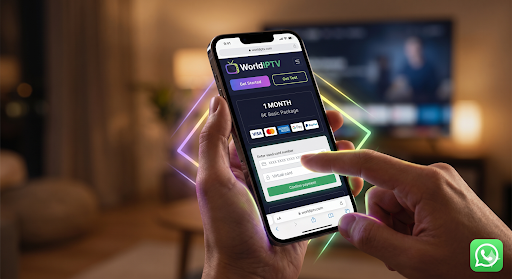
After selecting an appropriate plan, follow the complete subscription and activation process.
The buyer should expect to:
- Confirm the selected plan.
- Enter accurate order details.
- Complete payment through the available method.
- Save the transaction confirmation.
- Receive activation information.
- Follow the supported setup path.
- Complete an initial test.
- Contact support when necessary.
The subscription guide should own the detailed checkout and setup process. This article should not duplicate every activation step.
Stage 5: Retain the purchase evidence
Keep:
- Order confirmation
- Payment receipt
- Plan duration
- Renewal information
- Refund terms
- Activation instructions
- Support contact
- Relevant conversations
These records can help resolve questions about:
- Activation
- Billing
- Renewal
- Plan conditions
- Technical assistance
Hypothetical case study: an evidence-led WorldIPTV purchase
A buyer wants a longer WorldIPTV plan for a multi-device household.
Instead of purchasing immediately, the buyer:
- Identifies the main television and mobile devices.
- Confirms whether simultaneous connections are included.
- Reviews IPTV 4K conditions.
- Checks the renewal process.
- Reads the refund terms.
- Confirms how activation works.
- Compares available plan durations.
- Saves the order confirmation.
- Follows the documented setup path.
This process does not guarantee that no technical issue will occur.
It improves the quality of the buying decision and gives both buyer and support team better information if assistance is needed.
What WorldIPTV should publish in a public trust center
A public trust center would help WorldIPTV organize important information in one place.
This section could become a separate permanent page linked from:
- Footer
- Plans page
- Checkout
- Support page
- Major commercial articles
The trust center should not be a page filled with badges. It should contain information that buyers can inspect.
Service disclosure panel
Include:
- Supported device categories
- Setup-path overview
- Quality conditions
- Multi-device conditions
- Activation expectations
- Service limitations
- Maintenance wording
Commercial policy panel
Include:
- Plan durations
- Renewal method
- Refund eligibility
- Cancellation process
- Payment confirmation
- Support contact
Reliability methodology panel
Publish exact metrics only when the methodology exists.
For any reliability percentage, include:
| Reliability detail | Required information |
|---|---|
| Period | When the service was measured |
| Scope | Which systems were included |
| Method | How availability was observed |
| Maintenance | How planned work was treated |
| Geography | Which regions were represented |
| Source | Internal or independent |
| Updated | Date of the latest result |
When this information is unavailable, publish a process description instead of an unsupported number.
Copyright and responsible-use panel
Include:
- Copyright-contact details
- Notice procedure
- Responsible-use terms
- No universal authorization statement
- No protected promotional artwork
- No bypass instructions
A notice procedure should be clear enough for a rights holder to understand:
- Where to send the notice
- What information is required
- How the request is reviewed
- Whether additional information may be requested
Editorial methodology panel
Commercial content should disclose how it was created.
Include:
- Author name
- Relevant experience
- Publication date
- Last-updated date
- Source policy
- Article purpose
- What was verified
- What was not independently tested
- Disclosure that WorldIPTV owns or publishes the article
A useful disclosure might say:
“This commercial guide is published by WorldIPTV. It evaluates provider information through public disclosures, technical standards and consumer-protection guidance. It does not present independent laboratory testing unless a method is specifically published.”
This improves trust because the commercial relationship is transparent.
Trust-center checklist
| Trust-center section | Publish now | Publish after evidence is available |
|---|---|---|
| Plans and duration | ✓ | |
| Renewal information | ✓ | |
| Refund procedure | ✓ | |
| Support contact | ✓ | |
| Device setup categories | ✓ | |
| Copyright contact | ✓ | |
| Monitoring process | ✓ | |
| Exact uptime percentage | ✓ | |
| Independent reliability claim | ✓ | |
| Guaranteed response time | ✓ |
A trust center should separate information already verified from claims that still need measurement.
Final verdict: the best provider proves the claims that matter
The best IPTV Service 2026 should not be chosen through the largest catalog number, strongest adjective or most dramatic discount.
A serious commercial decision depends on three standards.
Important terms should be visible before payment
The buyer should understand:
- Duration
- Price
- Renewal
- Activation
- Device conditions
- Refund policy
- Support access
before completing checkout.
Performance claims should include conditions or evidence
Quality, uptime, compatibility and worldwide-use claims should be:
- Defined
- Qualified
- Documented where measurable
- Consistent across the website
WorldIPTV should satisfy the same standard applied to other providers
WorldIPTV becomes a stronger choice when it demonstrates:
- Clear plan structure
- Guided onboarding
- Device-support information
- Realistic IPTV 4K communication
- Accessible support
- Responsible policies
- Monitoring and operational maturity
- Long-term usability
The brand should not be presented as perfect for every user.
It should be presented as a strong choice for buyers whose connection, devices, expectations and preferred plan match the published service conditions.
WorldIPTV is a trusted choice when it makes the purchase easier to understand, the setup easier to follow and the service conditions easier to verify.
See whether WorldIPTV matches your setup
Compare duration, pricing, onboarding and support options after identifying your primary device, connection and expected use.

Best IPTV Service 2026 FAQs
What proof should support a best IPTV Service 2026 claim?
A best-provider claim should be supported by information that buyers can inspect.
Useful evidence includes:
Plan duration and price
Renewal conditions
Device setup documentation
Quality limitations
Monitoring process
Support routes
Refund terms
Copyright-contact information
Consistent website disclosures
Exact performance claims may require stronger support.
For example, an uptime percentage should include:
Measurement period
System scope
Monitoring method
Maintenance treatment
Geographic coverage
Source
A provider does not need laboratory evidence for every statement, but important claims should not remain
Is WorldIPTV the best IPTV provider for every user?
No provider can responsibly claim to be the best option for every user.
WorldIPTV may be a strong choice for buyers who value:
Clear plan options
Guided onboarding
Multi-device setup
Support access
Quality choices
Long-term usability
Suitability can still depend on:
Country
Internet connection
Device
Application
Desired resolution
Household usage
Plan conditions
The correct question is not only:
“Is WorldIPTV the best?”
It is:
“Does WorldIPTV’s published service structure match my setup and intended use?”
What should an IPTV uptime claim include?
An uptime claim should explain:
Which period was measured
Which systems were included
Which monitoring method was used
Whether maintenance was excluded
Whether degraded service counted
Which locations were represented
Whether the result was internally or independently measured
Without this information, the percentage has limited comparison value.
A qualified monitoring-process statement may be m
Does IPTV 4K availability prove 4K viewing quality?
No.
IPTV 4K availability means that higher-resolution options may be offered. The actual result depends on:
Source quality
Encoding
Delivery infrastructure
Internet route
Home network
Application
Device
Display
A buyer should confirm that the complete setup can support the desired quality.
A 4K television alone does not guarantee a stable 4K stream.
How can worldwide buyers verify IPTV terms before payment?
Worldwide buyers should review:
Plan duration
Total price and currency
Renewal
Activation expectations
Device conditions
Simultaneous-use terms
Quality limitations
Support contact
Refund eligibility
Cancellation procedure
Buyers should also save:
Plan description
Payment receipt
Confirmation
Terms visible at purchase
Activation instructions
Local legal rights can vary, so buyers should review the rules that apply in their country.
copyrightWhat makes an IPTV provider copyright-aware?
A copyright-aware provider communicates responsibly.
Useful signals include:
A copyright-contact route
A notice or takedown process
Terms against misuse
Original promotional imagery
No protected broadcaster logos
No copied program artwork
No bypass instructions
No unsupported universal-licensing claim
A copyright policy can show that a notice process exists. It does not automatically prove authorization for every item or territory.