


Searching “IPTV subscription legal” is a sensible first step before choosing a service—but the answer depends on more than the technology. IPTV simply describes how video is delivered over the internet. Whether a provider is authorized to offer particular channels, films, or programmes depends on its content rights and the countries those rights cover.
Before subscribing, check who operates the service, what it says about its rights, and whether its pricing and terms are clear. This guide offers a practical way to assess those claims, distinguish marketing language such as “Premium IPTV” from evidence, and make a more informed decision.
The useful question isn’t just “Is IPTV legal?” It’s “Who is providing this content, and what supports their claim that they may offer it where I live?”

IPTV describes how video is delivered—not whether it is authorized
IPTV means television or video delivered using internet protocol networks. The term describes a delivery method. It does not, by itself, tell you whether the service has permission to distribute a particular channel, film, series, or sports programme.
It helps to separate three ideas that are often blurred together:
| Term | What it means | What it does not establish |
|---|---|---|
| IPTV technology | Video is delivered over an internet connection | That the content is authorized |
| An IPTV service | A business or platform offers access to video content | That every item in its catalogue may be offered |
| Content rights | Permissions or agreements that may apply to specific content, uses, and territories | That the service is authorized in every country |
A provider may deliver a stream reliably and support several devices. Those facts relate to the technical service. They do not, on their own, establish the provider’s rights to distribute the content. Likewise, a service’s appearance, app, channel count, or “premium” label is not a substitute for evidence about its rights.
Copyright and licensing can involve several parties and different permissions. A rights holder may grant distribution rights to another business, and the scope may depend on the content, method of delivery, territory, and agreement. The World Intellectual Property Organization’s copyright FAQ provides general background on copyright, while its overview of copyright licensing in the digital environment discusses licensing in online settings.
Territory matters. An offer being accessible from a country does not prove that the provider is authorized to offer every programme there. Nor does a claim that a service is “worldwide” demonstrate that its rights cover every country. The relevant details depend on the actual service and applicable local rules.
For example, the EUIPO’s Agorateka portal helps users find legal online content offers in participating European countries and categories. It can be a useful discovery resource, but it is not a global certification of every IPTV service and should not be presented as one.
A hypothetical example: access is not the same as authorization
Imagine a customer can open a service’s website, pay for a subscription, and watch a sports channel without technical problems. That confirms the customer can access a stream. It does not, by itself, confirm who holds the relevant rights or whether the service may offer that content in the customer’s country.
The customer would need to assess the provider’s specific claims and the information available about the service. This example is hypothetical; it is not a finding about any particular provider.
Use this evidence ladder to assess an IPTV provider
A useful assessment starts with information that can be checked. Work through these steps in order: first identify the responsible business, then examine what it says about its content and rights. Keep separate notes for what the provider claims and what you can independently verify.
1. Identify the responsible business
Find out which business is responsible for the service and the transaction. A brand name may help identify a product, but it may not tell you which legal entity takes payment, provides support, or handles a complaint.
Before subscribing, look for:
- The business or provider name.
- A working contact method.
- Terms that explain the subscription and payment.
- A clear way to raise a question or complaint.
- A confirmation or receipt identifying the purchase.
Ask yourself:
- Who will receive my payment?
- Which business is responsible if there is a problem with the subscription?
- Where can I read the terms before paying?
A messaging account can be a convenient support channel, but it should not be the only information available about the provider or the transaction. If a business identity or the basic terms are difficult to find, ask for clarification before making a purchase.
For questions about WorldIPTV’s business or published service information, use the site’s contact page. A contact page can help you ask questions; its existence alone does not prove content rights or licensing.
2. Examine the provider’s rights claims
Next, look closely at what the provider actually says about its content. Does it explain who supplies the content, what rights it claims, or which territories the offer covers? Are those statements specific enough to understand, or are they only broad labels such as “legal,” “licensed,” or “copyright compliant”?
A useful distinction:
- A specific explanation describes what the provider is claiming and the scope of that claim.
- A general assurance says something is “legal” or “authorized,” but does not explain what that means.
- A complaint process explains how to report a concern; it does not itself demonstrate that the provider holds the necessary rights.
If the explanation is vague, ask the provider what it means and what information supports the claim. Keep the response and compare it with the service’s published terms. A statement on a website is still a statement by the provider; readers should not treat it as independent verification.
A rights claim is only as useful as its scope: what content it covers, which business is making the claim, and where the offer is supposed to apply.
The World Intellectual Property Organization’s material on digital copyright licensing is useful background for understanding why rights may involve agreements and online distribution. It does not verify the rights of any specific IPTV provider.

Use this evidence ladder to assess an IPTV provider
Continue by checking where the offer applies, what the subscription actually includes, and whether the provider’s claims remain consistent across its pages.
3. Check territory and content scope
A service may be available to visit online from many countries. That does not establish that every item it offers is authorized in every country. Content rights can be limited by territory, and the relevant rules depend on the countries and parties involved.
Look for clear answers to these questions:
- Which countries or regions does the provider say the service covers?
- Does it explain whether content availability varies by location?
- Are claims about specific programmes, channels, or events supported with clear information?
- Does the provider make a sweeping “worldwide” claim without explaining its scope?
Treat “available worldwide” as a claim to clarify, not as evidence of worldwide rights. Likewise, a service appearing in search results or being accessible from your location does not independently confirm that the provider is authorized to offer its content there.
For readers in Europe, EUIPO’s Agorateka portal can help locate legal online content offers in participating countries and categories. It is a starting point for discovery—not a registry that certifies every service or a substitute for checking a provider’s own claims.
4. Read the actual subscription terms
A service’s rights claims and its subscription terms are separate issues. Even if you are assessing an offer’s content, you should also understand what you are buying and what happens after payment.
Check the plan page and terms for:
- Total price: Is the amount due clear, including any stated extra charges?
- Subscription period: How long does the plan last?
- Start date: Does access begin on payment, account setup, or another stated event?
- Renewal: Does the plan end automatically, or can it renew?
- Cancellation: How do you cancel, and when does cancellation take effect?
- Refund information: What conditions and process does the provider publish?
- Devices and connections: Which device types are supported, and how many can be used at once?
- Support: What contact channels and service hours are actually stated?
Pay particular attention to the difference between devices supported and simultaneous connections. A service may allow account setup on several devices but limit how many can stream at the same time. The plan should explain that distinction before purchase.
If the plan page and terms disagree, pause and ask the provider to clarify in writing. Save the answer, the terms, and the order confirmation. These records can help you understand what was advertised and purchased; they do not prove the provider’s content rights.
5. Cross-check claims across the site
A website should describe its offer consistently. Compare the plan page, terms, support information, and any page discussing copyright or legality.
| What to compare | What to check |
|---|---|
| Price and duration | Do the advertised price and subscription period match the terms? |
| Renewal and cancellation | Does the plan page describe the same process as the terms? |
| Devices and connections | Are supported devices distinguished from simultaneous streams? |
| Availability | Are country and content claims consistent across pages? |
| Technical performance | Are uptime, speed, or activation claims specific and supported? |
| Rights language | Does the site explain what a legal or licensing claim means? |
For example, if one page says “works on all devices” while another lists only certain compatible systems, ask which statement controls. If two pages quote different uptime figures, treat the claim as unresolved until the provider explains how it is measured and which figure is current.
A polished design can make information easier to navigate, but design is not evidence of rights, technical performance, or business reliability. The useful test is whether important statements are clear, consistent, and supported.
Signals to verify—and claims that are not proof
Some information can help you understand who operates a service or what it promises. It should not be mistaken for proof of content authorization.
| Signal or claim | What it may tell you | What it does not prove |
|---|---|---|
| Named business and working contact | Who appears responsible for the transaction | That the business has rights to distribute its content |
| Published terms and payment details | What the customer is being asked to agree to | That every claim about content is correct |
| Copyright complaint process | How someone may submit a complaint | That the provider holds distribution rights |
| “Premium IPTV” label | How the service markets itself | A legal status, content licence, or quality level |
| Large channel or VOD count | The size of the provider’s advertised catalogue | Permission to offer every listed item |
| Device compatibility information | Which devices the provider says it supports | Authorization to distribute content |
| Uptime or activation figures | A stated technical-performance claim | Content rights or future service performance |
| Worldwide availability | A claim about where the service can be accessed | Rights covering all content in every country |
A copyright or DMCA notice deserves particular care. The DMCA is a United States copyright law. A provider’s statement that it accepts copyright complaints describes a reporting process; it does not, by itself, verify that the provider has rights to all the content it offers. For readers elsewhere, it also should not be treated as a universal legal approval.
As background, the UK Government’s copyright guidance explains copyright in the UK context. It is useful for that jurisdiction, but it is not a global legal ruling. A claim about a service in another country may require different local sources.
A practical rule: treat a provider’s statement as a claim to examine. Do not upgrade it to proof merely because it appears beside a legal-sounding badge, a complaint form, or a long list of features.
What “Premium IPTV” means—and what it doesn’t
Premium IPTV is a marketing phrase, not a universal legal category or an official certification. By itself, it does not tell you who owns or licenses the content, which countries the offer covers, or whether the service will meet a particular technical standard.
When a provider uses “premium,” look beyond the adjective. Ask what specific, verifiable features it refers to:
- Which devices are supported?
- How many simultaneous connections are included?
- What does the plan cost, and for how long?
- What support channels are available?
- Which performance claims are measured, and how?
- What does the provider say about the content and territories offered?
Two plans described as “premium” could be very different. One might include more device support; another might advertise a larger catalogue. Neither description establishes content rights. Compare the written terms and evidence, not just the label.
“Premium” can describe how a service is positioned. It does not answer the separate question of whether the service is authorized to provide particular content.
This distinction is especially useful when a plan combines several attractive claims—such as a large catalogue, worldwide access, high resolution, and broad device support. Assess each claim separately. Technical features and subscription benefits matter to the purchase decision, but they should not be used as substitutes for information about rights.

Questions to ask before subscribing
Before you compare plans, make sure you understand both the provider’s claims and the practical terms of the offer. Ask focused questions and keep the answers with the plan details you reviewed.
- Which business is responsible for the service and payment?
- What does the provider say about its rights to offer the content?
- Which countries or territories does the offer cover?
- Where can I read the full subscription, renewal, and cancellation terms?
- How many devices can be used at the same time, and what support is available?
If a provider’s answer is vague, ask for clarification before paying. A written response can help you understand the provider’s position, but it is still a statement from that provider—not independent proof of its rights.
A short example
A customer sees a plan advertised as “Premium IPTV, worldwide, all devices.” Before subscribing, they ask which countries the offer covers, whether multiple devices can stream simultaneously, and where the provider explains its content-rights claims.
If the answers clarify only the device limit but leave the territory and rights questions unanswered, the customer has useful plan information—but still has not verified the unresolved claims.
Good buying practice: separate “I understand the subscription” from “I have verified the provider’s content-rights claims.” One does not automatically establish the other.
How to assess WorldIPTV’s published information
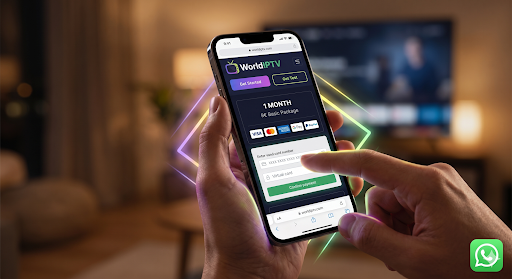
If you are considering WorldIPTV, read its current service pages and terms as you would those of any provider. Start with the plan information, review the subscription process, and check the provider’s business information. For questions that remain unanswered, use the contact page.
These pages can help you understand the advertised plans, ordering process, and contact options. Their existence does not, by itself, establish that particular content is licensed or authorized in a particular country. Check the wording, compare claims across the pages, and ask the business for clarification where needed.
For a credible commercial presentation, a provider should make relevant information easy to find and should be able to support claims it makes about its service. If a business makes a specific licensing or territory claim, it should explain what the claim covers. Do not treat a general “legal,” “licensed,” or “DMCA compliant” statement as a substitute for that explanation.
Before publishing or relying on a stronger claim about WorldIPTV, the business should be able to verify:
- which business provides the service;
- what content or catalogue the claim concerns;
- which territories the claim covers;
- what evidence supports the claim;
- whether the statement matches the current offer and its terms.
If the business cannot substantiate a claim, the responsible choice is to narrow or remove it—not to imply that technical features, customer support, or a copyright complaint process proves authorization.

Frequently asked questions about IPTV subscription legality
Does “Premium IPTV” mean a service is licensed?
No. Premium IPTV is a marketing description, not a universal legal certification. It may describe advertised features or positioning, but it does not prove that a provider has the rights to distribute particular content.
Does a DMCA notice prove that an IPTV service has content rights?
No. A DMCA or copyright-complaint notice may explain how complaints are submitted. It does not, by itself, prove that the provider has rights to all the content it offers. The DMCA is a United States law, so the notice should not be treated as worldwide approval.
Can an IPTV service be available worldwide under the same rights?
Do not assume so. Content rights and applicable rules can vary by country and by content. A statement that a service is accessible worldwide does not establish that every item is authorized everywhere.
What should I do if a provider will not clarify its claims or terms?
Do not treat unanswered claims as verified. Ask the provider for clear information about the business, rights claims, territory, price, renewal, cancellation, and device limits. If essential details remain unclear, consider postponing the purchase and seeking guidance from an appropriate local authority or qualified adviser.
An evidence-first way to decide
Before choosing a plan, keep three questions separate:
- Who is responsible for the service and payment?
- What does the provider say about its rights, and what supports that claim?
- Do I understand the plan’s price, duration, renewal, devices, and support?
Table of Contents
Compare plans only after you understand the offer and have assessed the provider’s claims. A long feature list, “Premium IPTV” label, low price, or polished website cannot answer the rights question on its own.
The useful standard is straightforward: read the terms, check what can be checked, ask about what is unclear, and avoid treating unsupported assurances as proof.