


World TV IPTV A low subscription price does not always produce the lowest overall cost. A plan may look affordable at checkout but become poor value when its duration is longer than the customer’s realistic usage, the connection allowance does not fit the household, or extra setup costs were not considered before payment.
Choosing a World TV IPTV subscription in 2026 should therefore begin with a practical calculation rather than a promotional claim. The important question is not simply, “Which package costs less?” A better question is:
Which subscription gives me the best usable value for the time, devices and connections I will actually need?
This distinction matters because price and value are not the same. Price is the amount paid at checkout. Value depends on how much of the subscription is used, whether the setup works reliably, whether support is available when needed and whether the plan remains suitable until renewal.
This planner evaluates a world IPTV subscription through four connected factors:
- Effective monthly cost
- Expected usage period
- Required simultaneous connections
- Likelihood of renewal or upgrade
By calculating these factors before buying, customers can avoid paying for an unnecessarily long commitment, repeatedly purchasing short plans when a longer term would cost less, or choosing a plan that does not match their actual setup.
What this 2026 planner will help you calculate
- The effective cost per subscription month
- The cost per permitted active connection
- The difference between nominal and usable savings
- The financial effect of unused subscription time
- The value of flexibility
- The point at which a longer plan becomes financially reasonable
- The information needed before renewal or upgrade
The objective is not to push every visitor toward the longest subscription. It is to help each buyer choose the term that matches their current level of usage and confidence.
World TV IPTV Plan Costs at a Glance
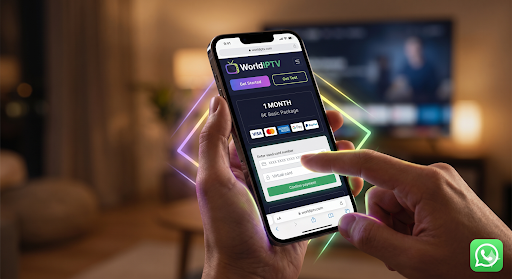
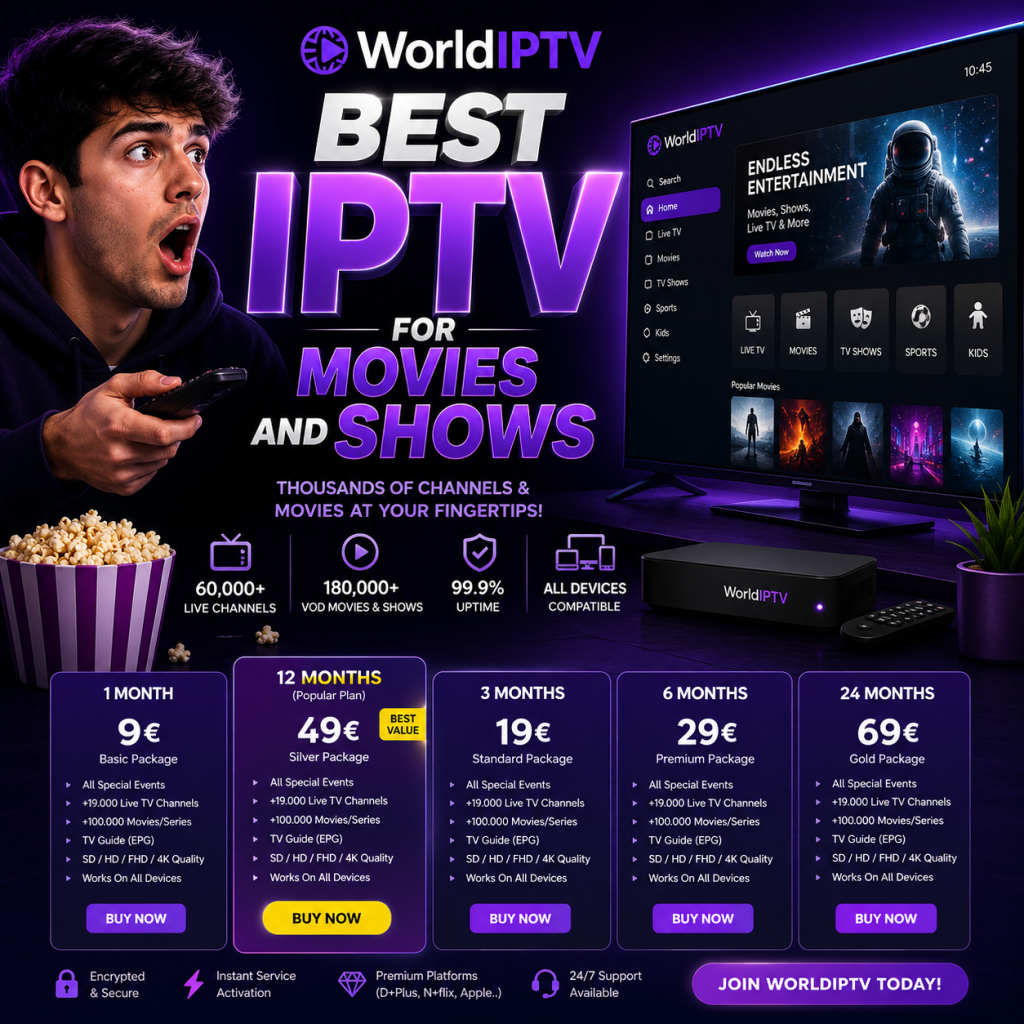
As checked on August 5, 2026, the World IPTV plans page displays five fixed-duration options: one month for €9, three months for €19, six months for €29, twelve months for €49 and twenty-four months for €69. A separate lifetime option is also displayed. Prices, promotions and commercial conditions can change, so buyers should verify the live plans page before completing payment.
The displayed price alone does not make the plans easy to compare. A one-month plan and a twenty-four-month plan involve very different commitment levels. Converting each price into an equivalent monthly cost creates a clearer starting point.
| Subscription duration | Displayed price | Effective monthly cost |
|---|---|---|
| 1 month | €9 | €9.00 |
| 3 months | €19 | €6.33 |
| 6 months | €29 | €4.83 |
| 12 months | €49 | €4.08 |
| 24 months | €69 | €2.88 |
Calculation:
Effective monthly cost = Total subscription price ÷ Number of monthsFor example:
€49 ÷ 12 months = approximately €4.08 per monthThe calculation shows that longer plans have a lower nominal monthly cost. However, this does not automatically make the longest plan the correct choice. The lower monthly figure is meaningful only when the customer expects to use the service for most or all of the subscription period.
Why the monthly equivalent matters
The monthly equivalent gives buyers a common unit for comparing plans. Without it, a €69 plan may appear expensive beside a €19 plan even though the longer package has a substantially lower equivalent monthly cost.
This calculation is particularly useful for customers comparing an IPTV store based on long-term value. It helps separate the initial payment from the cost of each month of expected use.
However, an effective monthly cost is based on several assumptions:
- The customer uses the complete subscription period.
- The primary device remains compatible.
- The household’s connection requirements remain stable.
- The service continues to meet the buyer’s needs.
- The customer understands the support and renewal process.
- No unexpected setup expense changes the total budget.
When those assumptions are uncertain, the cheapest monthly equivalent may carry the highest commitment risk.
A new customer who has not completed setup may obtain more practical value from a one-month plan at €9 than from a lower monthly rate that requires a large upfront commitment. In this situation, the extra monthly cost is not necessarily wasted. It purchases flexibility and limits exposure while the customer evaluates the setup.
Nominal savings versus usable savings
Nominal savings are the savings shown through a mathematical price comparison.
Usable savings are the savings the customer actually receives after accounting for usage, setup, support and unused subscription time.
Consider the cost of maintaining access for twelve months under different buying patterns:
| Twelve-month buying pattern | Total cost | Effective monthly cost |
|---|---|---|
| Twelve separate one-month plans | €108 | €9.00 |
| Four separate three-month plans | €76 | €6.33 |
| Two separate six-month plans | €58 | €4.83 |
| One twelve-month plan | €49 | €4.08 |
Based on the currently displayed prices, buying one twelve-month plan would cost:
- €59 less than purchasing twelve separate monthly plans
- €27 less than purchasing four three-month plans
- €9 less than purchasing two six-month plans
The calculation appears straightforward, but it describes nominal savings only.
Suppose a customer purchases twelve months for €49 but stops using the service after three months. The effective cost of the three months actually used is:
€49 ÷ 3 used months = €16.33 per used monthThe advertised monthly equivalent was approximately €4.08, but the customer’s real cost per used month became €16.33 because nine months were left unused.
This produces an important commercial rule:
A discount on time you will not use is not a real saving.
Long-term value should therefore be based on realistic usage rather than the largest visible discount.
Comparing twelve months with twenty-four months
The currently displayed twenty-four-month plan costs €69, while purchasing two separate twelve-month plans at the displayed price would total €98. This creates a nominal difference of €29.
| Twenty-four-month approach | Total cost | Difference |
|---|---|---|
| Two separate 12-month plans | €98 | — |
| One 24-month plan | €69 | €29 lower |
The longer plan offers stronger mathematical value, but it also requires greater confidence in:
- Continued usage
- Device stability
- Household requirements
- Service suitability
- Support availability
- Commercial terms
- Renewal and account-management conditions
The €29 difference can be viewed as the price of flexibility. A buyer who chooses two separate annual plans retains an opportunity to reassess the service after the first year. A buyer choosing twenty-four months accepts a longer commitment in exchange for the lower total price.
Neither approach is automatically correct. The right choice depends on whether the customer values flexibility now or lower nominal cost over time.
Treat lifetime subscriptions as a separate decision
A lifetime offer should not be compared with fixed-duration subscriptions by simply dividing its price by an assumed number of years. The meaning of “lifetime” can differ between businesses and commercial agreements.
Before evaluating a lifetime option, a buyer should request or review a clear definition of:
- Whose lifetime the term refers to
- Whether access depends on the continued operation of the service
- Whether the account can move to a replacement device
- Whether support is included for the full period
- Whether future technical changes are covered
- Whether the offer has account-use restrictions
- Whether the subscription can be transferred
- What happens if the service structure changes
- Which refund or remedy terms apply
Without these details, calculating a lifetime plan as though it guarantees a fixed number of years would create a misleading comparison.
A responsible pricing article should not claim that a lifetime option is the cheapest or most valuable merely because it can produce a low theoretical monthly figure. Its real value depends on written commercial conditions and the buyer’s long-term confidence.
Calculate the Real Cost of a World TV IPTV Subscription
The subscription price is only the first layer of total cost. A complete calculation should include all expenses and requirements connected to getting the service working in the customer’s actual environment.
A useful model is:
Real subscription cost =
Plan price
+ Optional player cost
+ Required device cost
+ Network-improvement cost
+ Additional-connection cost
+ Paid setup assistance
+ Cost of unused subscription time
Not every buyer will face every cost. The purpose of the formula is to identify possible expenses before checkout rather than after activation.
Subscription price and payment conditions
Before purchasing from any IPTV store, confirm the complete transaction information rather than relying on a price displayed in a promotional area.
Check:
- Total amount payable
- Billing currency
- Subscription duration
- Promotion terms
- Start date
- End date
- Renewal method
- Renewal price
- Applicable taxes or payment charges
- Whether the payment is one-time or recurring
- How the purchase will appear on the payment record
- Whether an order confirmation will be issued
The initial price may be clear while the renewal price remains unclear. A customer should not assume that a promotional price will automatically apply again at renewal.
For example, a twelve-month promotion may provide strong first-year value. If the renewal price is different, the buyer should calculate the second-year cost separately rather than treating the introductory rate as permanent.
Cost per active connection
One of the most common sources of pricing confusion is the difference between devices and simultaneous connections.
These terms should not be treated as interchangeable:
- Compatible devices: Devices capable of running the required player or setup
- Configured devices: Devices on which account details have been entered
- Simultaneous connections: The number of streams or sessions permitted at the same time
A subscription may be configured on more than one compatible device while allowing only one active connection at a time. Buyers should confirm the exact rule before assuming that several household members can use the same subscription simultaneously.
Use this formula when the permitted number of simultaneous connections is known:
Cost per active connection per month =
Total subscription cost ÷ Plan months ÷ Permitted simultaneous connections
Example calculation
Suppose a hypothetical six-month subscription costs €29 and permits one simultaneous connection:
€29 ÷ 6 ÷ 1 = approximately €4.83 per active connection per monthIf a verified two-connection option cost €44 for six months, the calculation would be:
€44 ÷ 6 ÷ 2 = approximately €3.67 per active connection per monthThe second option has a higher total price but a lower cost per permitted active connection. It may offer better value for a household that genuinely uses two screens at the same time.
However, it would be poor value for a customer who almost always uses one screen. The second connection should solve a real usage requirement, not simply make the package appear larger.
Before adding a connection, ask:
- Do two screens regularly need to operate at the same time?
- Is simultaneous use permitted under the plan?
- Does the additional connection renew with the main subscription?
- Can the extra connection be removed later?
- Is setup support included?
- Would separate subscriptions cost more or less?
- Are there household, location or network restrictions?
The exact connection price and rules should come from the current commercial terms. They should never be guessed.
Setup and device-related costs
Some customers already own a suitable device and need no additional equipment. Others discover after payment that their television, media device, router or player environment needs improvement.
Possible setup-related expenses include:
- An optional player application
- A compatible media device
- Replacement of an outdated device
- Ethernet cabling
- A network adapter
- A better-positioned router
- A Wi-Fi extension solution
- Paid technical assistance
- Additional connection capacity
These expenses do not necessarily indicate that the subscription itself is expensive. They are part of the customer’s complete viewing environment.
A careful buyer should separate one-time setup costs from recurring subscription costs.
| Cost type | Examples | How to treat it |
|---|---|---|
| One-time cost | Device, cable, router improvement | Spread over its expected useful life |
| Recurring cost | Subscription renewal, connection add-on | Include in monthly or annual budget |
| Optional cost | Paid player, premium setup help | Include only when genuinely needed |
| Risk cost | Unused months, unsuitable plan | Reduce through testing and shorter commitments |
Spreading one-time costs over expected use
Suppose a customer purchases a €60 compatible device and expects to use it for three years.
€60 ÷ 36 months = approximately €1.67 per monthIf the customer also chooses a twelve-month plan at €49:
Subscription equivalent: €49 ÷ 12 = approximately €4.08 per month
Device equivalent: €60 ÷ 36 = approximately €1.67 per month

Estimated combined monthly cost: €5.75
This calculation gives a more realistic picture than describing the service as costing only €4.08 per month.
The device may also support other lawful applications and uses, so the full device cost does not always belong exclusively to the IPTV subscription. The calculation should therefore be treated as a budgeting model, not an accounting rule.
The cost of time and support
Time has value even when no separate fee appears on the invoice.
A very low subscription price can become unattractive when the customer repeatedly spends time:
- Re-entering account information
- Reconfiguring devices
- Testing several players
- Resolving login errors
- Contacting support without a clear response process
- Moving access to a replacement device
- Investigating simultaneous-use limitations
- Correcting renewal or payment misunderstandings
For a customer who needs assistance, good onboarding and clear support processes can create more value than a small price difference between plans.
This does not mean that every higher-priced option automatically provides better support. Buyers should look for observable evidence:
- A visible contact method
- Clear setup instructions
- A defined response process
- Account-recovery guidance
- Device-change support
- Renewal assistance
- Written commercial policies
Support should be treated as part of the plan’s practical value, especially for first-time users.
Use Risk-Adjusted Value Instead of Choosing Only by Price
A simple price table tells buyers what each plan costs. It does not tell them how likely they are to receive the expected value.
A stronger decision method is risk-adjusted value.
Risk-adjusted value compares the possible saving from a longer plan with the uncertainty attached to using that plan successfully for its full duration.
The principle is simple:
Higher confidence can justify a longer commitment.
Higher uncertainty increases the value of flexibility.
The three parts of World TV IPTV plan value
Each plan should be judged through three areas.
| Value factor | Main question | Why it matters |
|---|---|---|
| Price efficiency | What is the effective monthly cost? | Measures nominal financial value |
| Usage confidence | How likely am I to use the complete term? | Measures unused-time risk |
| Operational fit | Does the plan match my setup and connections? | Measures practical suitability |
A plan produces strong value only when all three areas are reasonably aligned.
Price efficiency
Price efficiency improves as the monthly equivalent falls. Based on the current displayed prices, longer durations have a lower equivalent monthly cost.
However, price efficiency alone cannot determine whether the buyer should commit.
Usage confidence
Usage confidence measures how certain the customer is that the subscription will remain useful.
Confidence may be higher when:
- The buyer has already completed setup
- The main device works correctly
- Usage is regular
- Connection needs are known
- Support has been tested
- The customer understands the renewal process
Confidence may be lower when:
- The buyer is completely new
- The device has not been tested
- Usage is occasional or uncertain
- The household may need more connections
- The customer may move or replace equipment
- Commercial conditions are unclear
Operational fit
Operational fit measures whether the subscription matches the customer’s actual environment.
A plan may have strong price efficiency and high usage confidence but still be unsuitable when it does not support the required number of simultaneous connections or the customer has not prepared a workable device environment.
Calculate the cost of unused time
Use this formula:
Unused-term cost =
Remaining unused months × Effective monthly cost
A customer who buys twelve months for €49 but stops using the service after five months leaves seven months unused.
7 × €4.08 = approximately €28.56 of unused nominal valueThe exact economic loss depends on refund eligibility and whether the subscription can still be used later, but the calculation makes the commitment risk visible.
Commitment-risk score
Use the following scorecard before selecting a long-term World TV IPTV plan.
| Decision question | Low risk | Medium risk | High risk |
|---|---|---|---|
| Has the main setup been tested? | Yes | Partly | No |
| Is the primary device stable? | Yes | Mostly | Uncertain |
| Is usage regular? | Weekly or daily | Occasional | Unknown |
| Are connection needs clear? | Yes | May change | Unknown |
| Has support been tested? | Yes | Not yet | Unclear |
| Are renewal conditions understood? | Yes | Partly | No |
| Is the expected usage period predictable? | Yes | Approximately | No |
| Are commercial policies available? | Yes | Incomplete | Missing |
How to interpret the score
- Mostly low-risk answers: Compare twelve- and twenty-four-month value.
- A mixture of low and medium risk: Consider a three- or six-month term.
- Several high-risk answers: Use a shorter validation period or pause until the missing information is confirmed.
- Unclear payment or commercial conditions: Do not allow a discount to override the need for clarity.
Illustrative case study: flexibility versus headline savings
Consider two hypothetical customers.
Customer A: first-time buyer
Customer A has never used the service, has not tested the primary device and is unsure whether the household will need one or two simultaneous connections.
The twelve-month plan has a lower monthly equivalent, but Customer A has high uncertainty. A one-month or three-month plan may provide better risk-adjusted value because it allows the customer to validate:
- Device setup
- Regular usage
- Support access
- Connection requirements
- Overall suitability
Customer A pays a higher monthly equivalent but reduces the risk of purchasing unused time.
Customer B: established user
Customer B has used the service consistently, understands the setup, uses one stable device and does not expect the connection requirement to change.
Customer B has:
- High usage confidence
- Low setup risk
- Clear connection needs
- A predictable renewal requirement
For Customer B, comparing twelve- and twenty-four-month options is more reasonable because the lower monthly equivalent is supported by proven usage.
The practical rule
Choose the shortest plan that gives you enough time to establish confidence. Choose a longer plan only after your usage demonstrates that the lower monthly cost will become real value.
This approach protects first-time customers without preventing established customers from benefiting from longer-term pricing.
Which Plan Length Fits Your Current Stage?
The right World TV IPTV plan is not determined only by price. It also depends on how familiar the customer is with the service, how stable the device setup is, how often the subscription will be used and how confident the buyer feels about making a longer commitment.
A first-time customer and an established customer should not necessarily make the same decision, even when they use similar devices. The first-time customer still needs to confirm compatibility, support quality and regular usage. The established customer may already have enough evidence to compare longer subscriptions based on cost and value.
For this reason, plan duration should be treated as a subscription stage rather than simply a pricing option.
| Customer stage | Main objective | Suitable planning direction |
|---|---|---|
| Validation stage | Test setup, usage and support | Short duration |
| Routine-testing stage | Observe normal use over time | Short-to-medium duration |
| Established-use stage | Balance flexibility and savings | Medium duration |
| Proven-use stage | Reduce monthly equivalent cost | Longer duration |
| Long-term stage | Maximize value after extensive testing | Longest suitable duration |
The customer should progress toward a longer subscription only when confidence increases. A lower monthly price should be the result of proven suitability—not the reason to ignore unresolved questions.
One-Month Plan — Validation Stage
A one-month subscription is usually most appropriate when the customer is still validating the service environment.
It may suit someone who:
- Has not used the service before
- Has not tested the primary device
- Is unsure about player compatibility
- Does not yet know the required number of connections
- Has not evaluated the support process
- Expects household or device changes
- Wants limited financial commitment
A one-month plan normally has the highest monthly equivalent cost, but the customer receives something valuable in exchange: flexibility.
The purpose of this stage is not simply to access the service for thirty days. It is to collect enough information to make the next decision with greater confidence.
During the validation period, the customer should evaluate:
- How easily the account was activated
- Whether instructions were clear
- Whether the primary device remained stable
- Whether regular household use was practical
- How the connection behaved at different times
- Whether support was reachable when needed
- Whether one simultaneous connection was sufficient
- Whether the customer expects to continue using the service
A short plan can therefore act as a controlled commercial test. The customer pays a higher equivalent monthly price but avoids the greater risk of committing to a long period before understanding the service.
The first subscription should answer questions. The next subscription should reflect the answers.
When a one-month plan may not be necessary
A one-month term may offer less value when the customer has already:
- Used the service successfully
- Tested the main device
- Confirmed connection requirements
- Experienced the support process
- Established a predictable usage routine
In that situation, repeatedly purchasing the shortest term may create unnecessary cost.
Three-Month Plan — Routine-Testing Stage
A three-month plan creates more time to assess normal use without requiring a major long-term commitment.
It may fit customers who:
- Completed initial setup successfully
- Need more than one month to judge regular usage
- Want to observe performance under different household conditions
- Are still evaluating support and account management
- Expect to continue but are not ready for a longer term
- Need time to confirm whether an additional connection is necessary
A one-month test can confirm that the service works. A three-month period can show whether it remains useful as part of the customer’s actual routine.
That distinction matters because first impressions may not represent long-term use. A customer may use a new subscription frequently during the first few days and then discover that normal usage is much lower. Another customer may begin with occasional use but gradually make it part of a regular schedule.
Three months gives the buyer enough time to observe:
- Weekly usage frequency
- Device reliability
- Household scheduling conflicts
- Support consistency
- Account access habits
- Network conditions over a longer period
- Whether the service remains valuable after the initial novelty
Illustrative case study: the cautious household
A household begins with one primary television and one permitted connection. During the first month, the setup works correctly, but family members occasionally want to use two devices at the same time.
Moving immediately to a long-term plan with extra capacity may be premature. A three-month term gives the household time to determine whether simultaneous use is frequent enough to justify an additional connection.
At the end of the period, the household can review actual behavior instead of relying on assumptions.
If two-screen use occurred only once or twice, paying for additional capacity may not be necessary. If it occurred several times each week, an upgrade may provide measurable value.
Six-Month Plan — Established-Use Stage
A six-month subscription sits between short-term flexibility and long-term savings.
It may be suitable when:
- The main setup has been tested
- Usage has become regular
- Support expectations are understood
- Connection requirements are mostly stable
- The customer expects continued use
- A twelve-month commitment still feels too long
For many buyers, six months can provide a useful balance. It reduces the need for frequent renewals while preserving an earlier opportunity to reassess the service.
A six-month decision should be based on evidence from previous use. Before choosing it, the customer should be able to answer:
- Which device will be used most often?
- How many screens operate simultaneously?
- Is the internet environment stable enough?
- Has support been responsive when needed?
- Is the customer likely to use the subscription throughout the term?
- Are the commercial and renewal conditions understood?
The plan may offer good value for customers who are confident about the next several months but do not want to predict their needs for a full year.
Six-month value test
Use the following checklist:
| Question | Yes | No |
|---|---|---|
| Has the setup been used consistently? | ||
| Is the main device stable? | ||
| Are connection needs understood? | ||
| Has support been tested? | ||
| Is continued use likely for six months? | ||
| Are renewal terms clear? |
If most answers are yes, a six-month term may be reasonable. If several answers remain no, the buyer may benefit from maintaining greater flexibility.
Twelve-Month Plan — Proven-Use Stage
A twelve-month subscription becomes more appropriate when the customer has moved beyond experimentation and can reasonably predict long-term usage.
It may fit customers who:
- Have used the service through a meaningful evaluation period
- Have a stable device setup
- Use the service regularly
- Understand the connection rules
- Have tested support
- Know how activation and renewal work
- Expect their household requirements to remain stable
The commercial appeal of an annual plan is usually its lower monthly equivalent cost. However, the buyer should not choose twelve months solely because it appears cheaper.
The customer should first confirm that the plan remains a good fit across the full year.
Factors to consider include:
- Possible device replacement
- Changes in household usage
- Moving to another home or country
- Changes in internet access
- Need for additional connections
- Renewal or account-transfer conditions
- Changes in personal budget
- Continued usefulness over the complete term
Annual-plan confidence test
A twelve-month plan is more defensible when the customer can say:
“I know how I use the service, I understand its limitations, my setup is stable and I expect my requirements to remain similar.”
It is less suitable when the customer’s reasoning is:
“The annual plan is discounted, so I should buy it even though I have not tested anything.”
A discount should reward confidence. It should not replace due diligence.
Twenty-Four-Month Plan — Long-Term Commitment Stage
A twenty-four-month plan should be treated as a major commitment rather than merely an inexpensive monthly option.
It may be suitable only when:
- The customer has a proven usage history
- Devices and connections are stable
- Support has been tested over time
- The service structure is well understood
- Long-term usage is highly likely
- Commercial terms are clearly documented
- The customer accepts reduced flexibility
The longer the subscription period, the more important it becomes to evaluate changes that may occur during the term.
Over two years, a customer may:
- Replace a television or media device
- Change internet providers
- Move home
- Need more simultaneous connections
- Reduce household usage
- Change payment methods
- Require account recovery
- Need assistance transferring the setup
Before selecting the longest term, the customer should confirm how these situations are handled.
Long-term commitment table
| Consideration | Question to confirm |
|---|---|
| Device changes | Can access be transferred to a replacement device? |
| Household changes | Can the connection structure be modified? |
| Support | What assistance remains available during the term? |
| Renewal | What happens when the subscription ends? |
| Account access | How is account recovery handled? |
| Service changes | How are material changes communicated? |
| Refunds and remedies | Which written conditions apply? |
A twenty-four-month plan may offer the strongest nominal value, but it also creates the highest exposure to future changes. Customers should select it because their usage has been proven—not because the price table makes the monthly figure look attractive.
Four Plan-Value Scenarios
The following scenarios demonstrate how different customers can reach different plan decisions even when they are comparing the same World TV IPTV subscription options.
These examples are decision models, not universal recommendations. The correct plan depends on verified prices, commercial terms and individual requirements.
First-Time Single-Screen Buyer
Customer profile:
- One main television or media device
- One expected active screen
- No previous experience with the service
- Uncertain long-term usage
- Support not yet tested
The most important objective for this customer is not maximizing the discount. It is reducing uncertainty.
A shorter plan may provide stronger risk-adjusted value because the customer needs to verify:
- Setup compatibility
- Player stability
- Login process
- Normal usage frequency
- Support quality
- Renewal procedure
Recommended decision method
- Begin with a limited validation period.
- Use the same primary device consistently.
- Record any setup or support issues.
- Review actual usage before the plan ends.
- Upgrade only when continued use is likely.
Main risk: Paying for a long term before knowing whether the service fits the customer’s routine.
Commercial direction: Short plan first, followed by a value comparison before renewal.
Regular Single-Screen Customer
Customer profile:
- One stable device
- One active connection
- Predictable weekly use
- Setup already understood
- No immediate household changes expected
This customer has less operational uncertainty. The main decision is whether the expected savings of a longer term justify the reduced flexibility.
A six- or twelve-month plan may offer better value when:
- Usage is regular
- Support has been satisfactory
- The device setup is stable
- The customer expects continued use
- The price difference is meaningful
Example decision
A customer has completed two shorter subscription periods without major problems. The service is used several times each week, and no additional connection is needed.
The customer can now compare:
- The higher total cost of repeated short subscriptions
- The lower equivalent monthly cost of a longer plan
- The value of retaining an earlier reassessment point
A six-month plan may suit a customer who still values flexibility. A twelve-month plan may be reasonable when future usage is more predictable.
Main risk: Continuing to purchase short terms out of habit even after usage has become stable.
Commercial direction: Compare medium- and long-term cost based on proven usage.
Household Requiring Two Active Screens
Customer profile:
- Two or more configured devices
- Two screens may operate simultaneously
- Household schedules overlap
- Additional connection rules must be confirmed
This customer must calculate more than plan duration. The number of permitted simultaneous connections may have a greater financial effect than the subscription term.
Before purchasing, confirm:
- Whether the base plan permits one or multiple active connections
- The price of an additional connection
- Whether both connections share the same expiry date
- Whether devices must remain in one household
- Whether the connection can be added later
- Whether the add-on renews automatically
- Whether setup support covers both devices
Comparison model
| Option | Main advantage | Main limitation |
|---|---|---|
| One standard connection | Lower initial cost | Cannot support regular simultaneous use |
| Plan with added connection | One account structure | Additional cost and conditions |
| Two separate subscriptions | Separate management | May have a higher total cost |
| Staggered usage | No extra charge | Requires household coordination |
The customer should not pay for a second connection merely because several devices are compatible. The decision should be based on whether simultaneous use actually occurs.
Illustrative household study
A household has three compatible devices but normally uses only one at a time. A second connection would add little practical value.
Another household has two family members who regularly use different screens at the same time. For them, an added connection may reduce interruptions and account conflicts.
Main risk: Confusing device compatibility with simultaneous-use permission.
Commercial direction: Calculate cost per active connection before selecting the duration.
Existing Customer Approaching Renewal
Customer profile:
- Current subscription is nearly finished
- Usage history is available
- Support and setup have already been experienced
- Customer must renew, upgrade, downgrade or stop
An existing customer has access to information that a first-time buyer does not have: actual experience.
The renewal decision should use evidence from the completed term.
Review:
- How frequently the service was used
- Which devices were actually used
- Whether additional screens were needed
- How often support was contacted
- Whether the current duration felt too short or too long
- Whether the plan remained valuable until expiry
- Whether the household expects any changes
Renewal evidence table
| Review area | Evidence to consider |
|---|---|
| Usage | Days or hours of regular use |
| Devices | Devices used, not merely configured |
| Connections | Frequency of simultaneous use |
| Support | Number and type of support requests |
| Value | Whether the full term was used |
| Flexibility | Whether the customer wanted an earlier exit |
| Future needs | Expected changes before the next expiry |
Main risk: Renewing automatically without reviewing whether the current plan still fits.
Commercial direction: Keep the same duration only when it continues to match actual use.
World TV IPTV Renewal Decision Framework
Renewal should not be treated as a routine payment. It is an opportunity to compare the customer’s previous plan with current and expected requirements.
A disciplined renewal decision has four possible outcomes:
- Renew the same duration
- Upgrade to a longer duration
- Add or remove connections
- Shorten, downgrade or delay the next purchase
The correct result depends on evidence, not habit.
Renew the Same Duration When
Renewing the existing term may be appropriate when:
- Usage remains consistent
- The current duration suits the budget
- Device requirements have not changed
- The connection allowance remains sufficient
- The customer values the current level of flexibility
- Support has met reasonable expectations
- The renewal conditions remain acceptable
Keeping the same plan is not a failure to optimize. Stability has value.
A customer does not need to move to the longest available term simply because the service has been satisfactory. The current duration may already provide the right balance between price and control.
Same-term renewal example
A customer uses one screen regularly and renews every six months. The term is long enough to avoid frequent payments but short enough to provide two review points each year.
Although a twelve-month plan may have a lower monthly equivalent, the customer may prefer the six-month structure because household circumstances could change.
In this case, flexibility is part of the value calculation.
Upgrade to a Longer Term When
Moving to a longer subscription may make sense when:
- The current plan was used fully
- Usage remained stable
- The primary device performed reliably
- The customer expects continued use
- Support and account management are understood
- The longer term produces meaningful savings
- The added commitment does not create financial pressure
Before upgrading, calculate the actual difference.
Expected saving =
Cost of repeatedly renewing the current term
− Cost of the proposed longer term
Then ask whether the saving is large enough to justify:
- A higher upfront payment
- Reduced flexibility
- Exposure to future household changes
- A later opportunity to reassess
Upgrade example
A customer repeatedly purchases three-month plans and has completed several successful terms. Usage is consistent, and the setup is stable.
The customer should compare the total annual cost of four three-month renewals against one annual subscription.
When the saving is meaningful and the customer expects another year of use, upgrading may provide better value.
Add a Connection When
An additional connection may be justified when two or more screens regularly operate at the same time.
Use actual household behavior as the decision basis.
Add capacity when:
- Simultaneous-use conflicts happen frequently
- The current account structure cannot support normal usage
- The add-on price is clear
- Both devices are compatible
- The terms permit the intended household use
- The additional connection costs less than a reasonable alternative
Do not add a connection simply because multiple devices exist.
Three configured devices do not necessarily require three connections. The important number is the maximum number of devices that must be active simultaneously.
Connection-need calculation
Track usage for one or two weeks:
| Day | Screen 1 active | Screen 2 active | Conflict occurred |
|---|---|---|---|
| Monday | Yes | No | No |
| Tuesday | Yes | Yes | Yes |
| Wednesday | Yes | No | No |
| Thursday | Yes | Yes | Yes |
| Friday | Yes | Yes | Yes |
| Weekend | Variable | Variable | Record result |
If simultaneous demand is regular, additional capacity may provide practical value. If overlap is rare, household scheduling may be more economical.
Downgrade or Shorten the Term When
A shorter or less expensive arrangement may be more suitable when:
- Usage has decreased
- A household member no longer requires access
- An additional connection is unused
- The customer expects to move
- A device replacement is planned
- The current term felt too long
- Budget flexibility has become more important
- Future usage is uncertain
Downgrading should not be viewed negatively. It is a normal part of responsible subscription management.
A plan that matched the customer last year may not match the customer now.
Downgrade case study
A household originally needed two simultaneous connections. After a household member moved away, the second screen was rarely used.
Renewing the same structure would preserve unused capacity. Removing the extra connection or selecting a simpler plan could improve value without reducing the household’s actual experience.
Pause the Purchase or Renewal Decision When
A customer should delay payment when essential commercial information is missing.
Pause when:
- The total price is unclear
- Renewal conditions are not available
- Simultaneous-connection rules cannot be confirmed
- Device-transfer requirements are uncertain
- Support cannot explain account recovery
- Refund information is incomplete
- The seller’s identity is unclear
- Content-authorization claims conflict with the written terms
- The offer depends on exaggerated or unverifiable promises
No discount should be strong enough to justify an unclear transaction.
Commercial clarity is part of product value. When the terms are uncertain, the price comparison is incomplete.
Complete a 14-Day Pre-Renewal Review
The most effective renewal decisions are made before the final day of the subscription.
Waiting until access is about to expire creates unnecessary pressure. It can lead to automatic repetition of the existing plan without reviewing price, usage or household changes.
A 14-day pre-renewal review gives the customer enough time to evaluate the current subscription, confirm the commercial terms and select the next stage without urgency.
Fourteen Days Before Renewal
Begin with a complete review of the current term.
Record:
- Subscription expiry date
- Current plan duration
- Original purchase price
- Actual usage frequency
- Main device used
- Number of active screens
- Support requests
- Setup changes
- Connection conflicts
- Expected household changes
Use this review table:
| Review question | Customer notes |
|---|---|
| Did I use the full subscription term? | |
| How frequently did I use it? | |
| Which devices did I actually use? | |
| Did simultaneous-use conflicts occur? | |
| Was support required? | |
| Did the current duration feel appropriate? | |
| Are my future needs likely to change? |
This stage should focus on evidence from the completed subscription.
Seven Days Before Renewal
Confirm the information required for the next purchase.
Check:
- Current renewal price
- Available plan durations
- Payment currency
- Payment method
- Account email
- Connection requirements
- Device-transfer procedure
- Support contact
- Cancellation conditions
- Refund or remedy policy
Do not assume that the price or commercial terms are unchanged from the previous purchase.
This is also the right time to compare whether:
- The same duration still provides value
- A longer term creates a meaningful saving
- A shorter plan offers useful flexibility
- Another connection is genuinely required
- An unused connection should be removed
Three Days Before Renewal
Make the final plan decision.
Use the following sequence:
- Calculate the effective monthly cost.
- Compare it with repeated short-term purchases.
- Review unused-time risk.
- Confirm the number of simultaneous connections.
- Check whether household requirements may change.
- Read the relevant commercial policies.
- Select the plan only after the complete cost is understood.
Customers who need help with checkout, activation or setup can review the WorldIPTV subscription and activation guide before completing the next purchase.
Before Completing Payment
Save a clear record of:
- Plan name
- Subscription duration
- Number of permitted connections
- Total price
- Currency
- Payment confirmation
- Order reference
- Activation information
- Start date
- Expiry date
- Renewal conditions
- Support contact
- Applicable refund or remedy terms
A screenshot or saved confirmation can help the customer resolve future account, payment or renewal questions. It should not contain sensitive information that could compromise account security.
After Renewal
Confirm that:
- The correct duration was added
- The expiry date is accurate
- The connection allowance is correct
- Account access continues normally
- The payment confirmation matches the order
- No unexpected recurring payment was created
- Support can locate the renewed account
Any discrepancy should be reported promptly through the documented support channel.
Renewal-readiness checklist
| Requirement | Confirmed |
|---|---|
| Current usage has been reviewed | ☐ |
| Plan duration has been compared | ☐ |
| Monthly equivalent has been calculated | ☐ |
| Connection needs are confirmed | ☐ |
| Current price has been verified | ☐ |
| Renewal terms have been read | ☐ |
| Device changes have been considered | ☐ |
| Support contact has been saved | ☐ |
| Payment confirmation will be retained | ☐ |
The renewal process should end with a deliberate decision:
Renew because the plan still fits, upgrade because the evidence supports it, or shorten the term because flexibility now provides greater value.

Evaluate Long-Term Value Through Infrastructure and Support
The long-term value of a World TV IPTV subscription is not determined by price alone. A low monthly equivalent can still become poor value when account access is difficult, setup instructions are unclear, service interruptions are not communicated properly, or support cannot resolve ordinary device and renewal issues.
Infrastructure and support should therefore be evaluated as part of the subscription—not as separate technical details.
For most customers, infrastructure quality is difficult to inspect directly. Buyers cannot normally see server capacity, traffic routing, redundancy systems or monitoring dashboards. They can, however, evaluate the visible results of a well-managed service structure.
These results may include:
- Clear activation procedures
- Consistent account access
- Reasonable loading behavior
- Organized maintenance communication
- Fast identification of account problems
- Device-transfer assistance
- A defined support process
- Accurate renewal handling
The purpose of this section is not to promise uninterrupted performance. Every internet-based service can be affected by local networks, device limitations, maintenance or wider infrastructure conditions. The objective is to help buyers evaluate whether the service appears organized enough to support long-term use.
Monitoring and Capacity Management
Monitoring allows a service operator to identify technical problems before they affect a large number of users or before a minor problem develops into a larger incident.
A properly managed monitoring process may observe:
- Server availability
- Traffic levels
- Resource usage
- Connection errors
- Authentication failures
- Abnormal response times
- Capacity pressure
- Repeated account-access problems
Capacity management is equally important. A system that works correctly during quiet hours may behave differently when many customers connect simultaneously.
A buyer does not need to understand every technical component. However, the buyer can ask practical questions:
- Is the system monitored continuously or periodically?
- How are widespread incidents identified?
- Is planned maintenance communicated?
- What happens when one part of the infrastructure fails?
- Can support distinguish an account problem from a wider service problem?
- Is there a clear escalation process?
The IPTV infrastructure and server guide provides more detail about monitoring, redundancy, capacity and load management.
Why redundancy matters
Redundancy means that important functions are not dependent on only one component. When one system fails, another component may help maintain operations or reduce the effect of the failure.
Redundancy can apply to:
- Servers
- Network routes
- Data storage
- Authentication services
- Backup systems
- Monitoring tools
- Support communication
Redundancy does not mean that downtime is impossible. It means the infrastructure has been designed to reduce single points of failure.
A trustworthy commercial article should avoid statements such as:
- “Zero downtime”
- “No buffering ever”
- “Guaranteed uninterrupted access”
- “Works perfectly in every country”
These claims are unrealistic because performance also depends on factors outside the provider’s control.
A more responsible position is:
Reliable infrastructure reduces preventable problems, while clear support helps customers resolve issues that still occur.
Support Quality as Part of Subscription Value
Support is especially important during:
- Initial activation
- Player configuration
- Password or account recovery
- Device replacement
- Connection-limit questions
- Subscription renewal
- Additional-connection setup
- Payment confirmation
- Expiry-date correction
A support system should be evaluated by its structure, not only by the speed of one response.
Useful support indicators include:
| Support factor | What the customer should look for |
|---|---|
| Contact method | A clearly published support channel |
| Instructions | Simple and device-relevant guidance |
| Response process | Confirmation that the request was received |
| Account verification | A safe process that protects customer details |
| Escalation | A method for unresolved cases |
| Renewal support | Help confirming plan duration and expiry |
| Device migration | Guidance when replacing equipment |
| Records | Order or ticket information that can be referenced later |
A service may answer quickly but still provide weak support if the response does not solve the issue. The quality of support should be judged through:
- Accuracy
- Clarity
- Consistency
- Security
- Resolution
- Follow-up
Customers can review the WorldIPTV service structure to understand how the service presents its plans, device support and onboarding process.
Illustrative Case Study: Cheap Plan, High Support Cost
A customer selects the lowest-cost long-term plan and saves €20 compared with repeated short subscriptions.
During the plan, the customer:
- Changes devices twice
- Loses activation details
- Experiences a connection-limit error
- Needs renewal clarification
- Spends several hours trying to obtain support
The subscription may still have a low monetary price, but the customer’s practical cost is higher because of lost time and unresolved friction.
Another customer pays slightly more for a shorter plan but receives clear activation instructions, retains the order confirmation and understands the support process. That customer may receive better usable value even though the nominal monthly price is higher.
This demonstrates why support efficiency belongs inside the total-cost calculation.
Worldwide Buyers Should Account for Local Network Conditions
The word “world” in World TV IPTV may suggest broad geographic use, but worldwide access does not mean identical performance in every country, city, household or internet environment.
Internet quality varies because of:
- Local infrastructure
- Provider congestion
- Distance from network equipment
- Mobile versus fixed connections
- Router quality
- Wi-Fi interference
- Household bandwidth sharing
- Device processing capability
- Regional routing
- Temporary outages
The International Telecommunication Union’s global connectivity data shows that internet access, affordability and connection quality still vary considerably around the world.
The ITU does not review or endorse individual IPTV providers. Its data is useful because it explains why two customers using the same service can experience different results.
Fixed Internet Versus Mobile Internet
A fixed home connection may provide more predictable performance than a mobile connection, but this depends on local conditions.
Mobile internet can be affected by:
- Signal strength
- Network congestion
- Data limits
- Indoor coverage
- Weather
- Movement between network cells
- Provider traffic management
A mobile connection may work well during one period and become less consistent during busy hours.
Customers using mobile data should confirm:
- Monthly data allowance
- Speed reduction policies
- Hotspot restrictions
- Indoor signal quality
- Expected usage volume
Wi-Fi Quality Versus Internet Speed
A fast internet package does not guarantee strong Wi-Fi inside every room.
A customer may have sufficient internet speed at the router while experiencing weak performance on a television located far away.
Common Wi-Fi problems include:
- Thick walls
- Long distance from the router
- Interference from other networks
- Outdated router hardware
- Too many connected devices
- Poor router placement
- Use of crowded wireless bands
Before blaming the subscription, test:
- The same device near the router
- A wired connection where possible
- Another compatible device
- Another time of day
- Whether other household devices are using large amounts of bandwidth
This basic troubleshooting helps separate service-related problems from local network limitations.
Device Capability
Older devices may have:
- Limited memory
- Slow processors
- Outdated operating systems
- Restricted application support
- Weak Wi-Fi hardware
- Insufficient storage
A customer should confirm whether the device is suitable before committing to a long plan.
The cheapest subscription can become expensive if the buyer later needs to replace several devices unexpectedly.
Worldwide Buyer Checklist
| Network question | Customer answer |
|---|---|
| Is the connection fixed, mobile or shared? | |
| Is the main device near the router? | |
| Has the connection been tested during busy hours? | |
| Do other users share the same network? | |
| Is wired access available? | |
| Is the device operating system supported? | |
| Are data limits applicable? | |
| Is local support available from the internet provider? |
The objective is not to create a technically perfect environment. It is to understand the environment before selecting a long-term subscription.
Verify the Commercial Terms Before Purchasing or Renewing
A commercial transaction should be clear enough that the buyer understands what is being purchased, how much it costs, how long it lasts and what happens if a problem occurs.
This is particularly important for a digital subscription because the customer does not receive a physical product that can be inspected before payment.
The OECD recommendation on consumer protection in e-commerce emphasizes transparent business information, fair marketing, clear transaction terms, payment protection and access to dispute resolution.
These principles are useful when evaluating any digital subscription or IPTV store.
Confirm the Seller Information
Before purchasing, customers should be able to identify:
- The business or service name
- A working contact method
- The website domain
- The applicable terms
- The refund or remedy policy
- The privacy policy
- The payment confirmation process
- The support channel
A website should not rely only on promotional language. Trust is built through consistent information across:
- Product pages
- Checkout
- Terms
- Refund policy
- Privacy policy
- Support pages
- Confirmation emails
Conflicting information weakens customer confidence.
For example, if a pricing page describes one renewal process but the terms describe another, the customer may not know which rule applies.
Confirm the Complete Price
The buyer should know:
- Total price
- Currency
- Subscription duration
- Number of permitted connections
- Whether setup is included
- Whether additional costs apply
- Whether the payment repeats automatically
- Whether renewal occurs at the same price
- Whether promotions have expiry dates
Do not calculate value from the visible headline price until the complete transaction cost is known.
Confirm the Subscription Start and End Rules
Ask:
- Does the subscription begin immediately after payment?
- Does it begin after activation?
- Is there an activation deadline?
- Is the expiry date displayed?
- Can unused time be paused?
- Can the subscription be transferred to another device?
- Does adding a connection change the expiry date?
These details can materially affect value.
Confirm Renewal and Cancellation Conditions
Before purchasing a long-term plan, review:
- Whether renewal is manual or automatic
- How renewal reminders are provided
- Whether the customer can change plan duration
- Whether additional connections can be removed
- When cancellation must be requested
- Whether the account remains active until expiry
- Whether any fees apply
A manual renewal may provide more control. An automatic renewal may provide continuity but requires clear advance notice and cancellation terms.
Neither model is automatically better. The important requirement is transparency.
Confirm the Refund and Remedy Policy
A refund policy should clearly explain:
- Eligibility period
- Excluded situations
- How requests are submitted
- Required order information
- Processing time
- Whether partial refunds are available
- Whether technical troubleshooting must occur first
- Which payment methods may have limitations
Customers should review the current WorldIPTV refund policy before payment.
The article should not promise a refund unless the published policy clearly supports the specific situation.
Content Authorization and Responsible Use
Copyright compliance requires more than placing “DMCA” in a footer or policy page.
Copyright holders control important rights connected to reproduction, communication and distribution. The World Intellectual Property Organization provides international educational material about copyright protection and licensing.
A responsible IPTV-related website should:
- Avoid promising access to copyrighted content without documented authorization
- Avoid copying channel logos or promotional graphics
- Avoid using movie or program images without permission
- Avoid implying endorsement by media companies
- Avoid publishing instructions intended to bypass access controls
- Respond appropriately to valid copyright complaints
- Keep commercial claims consistent with its terms
Customers should also use subscriptions in accordance with:
- Local law
- Account terms
- Device rules
- Territorial restrictions
- Copyright requirements
- Household-use conditions
This article does not provide instructions for unauthorized access, circumvention or redistribution.
What DMCA Language Actually Means
The United States Digital Millennium Copyright Act includes conditional liability limitations for qualifying online service providers that satisfy applicable requirements.
The U.S. Copyright Office’s Section 512 resources explain the notice-and-takedown framework and related safe-harbor conditions.
However:
DMCA safe-harbor language is not a licence to distribute copyrighted content.
It also does not prove that:
- Every stream is authorized
- Every service is legal worldwide
- Content rights apply in every territory
- A provider has permission from all rights holders
A service should make only legal claims that it can substantiate.
Customers can also review the current WorldIPTV Terms of Service before making a purchase or renewal decision. The terms, pricing pages and service descriptions should remain consistent with one another.
Secure the Account and Payment Process
Subscription value can be lost when account information is handled carelessly.
Customers should protect:
- Login details
- Activation information
- Payment confirmation
- Email access
- Support records
- Device identifiers where applicable
Use a Unique Password
Do not reuse a password from:
- Banking
- Social media
- Shopping accounts
- Other subscription services
A compromised email account may allow another person to access order confirmations or reset subscription credentials.
Verify the Website Before Paying
Check:
- The correct domain is displayed
- The connection uses HTTPS
- The plan details match the expected purchase
- The final amount is correct
- The payment page is not an imitation
- The order confirmation is received
HTTPS protects data while it travels between the browser and the website, but it does not by itself prove that every claim on a website is accurate. Buyers still need to evaluate the seller and commercial terms.
Do Not Publish Activation Details
Customers should never post:
- Usernames
- Passwords
- Activation links
- Account screenshots
- Device identifiers
- Order numbers containing sensitive information
Publicly sharing account details may lead to unauthorized access or connection-limit problems.
Five-Minute World TV IPTV Plan Decision Worksheet
Use this worksheet before selecting, renewing or upgrading a plan.
| Decision question | Your answer |
|---|---|
| How long have I already tested the service? | |
| How frequently do I use it? | |
| What is my realistic future usage period? | |
| Which device will I use most? | |
| Is that device stable? | |
| How many screens operate simultaneously? | |
| Have I tested the support process? | |
| Could my household requirements change soon? | |
| Could I replace my device during the plan? | |
| Is the renewal method clear? | |
| Do I understand the refund conditions? | |
| What is my maximum comfortable upfront payment? | |
| How much flexibility do I need? |
Calculate the Monthly Equivalent
Total plan price ÷ Plan months = Effective monthly costCalculate the Cost per Permitted Connection
Total plan price ÷ Plan months ÷ Permitted simultaneous connectionsEstimate Unused-Time Risk
Possible unused months × Effective monthly costCompare Repeated Short Plans
Cost of repeated short plans − Cost of longer plan = Nominal savingThen ask:
Is the nominal saving large enough to justify the longer commitment?
Decision Key
Choose a Shorter Validation Plan When
- The service has not been tested
- The device is uncertain
- Usage is unpredictable
- Support has not been evaluated
- Connection needs are unclear
- Commercial terms require clarification
Compare Medium-Duration Plans When
- Setup works
- Usage is becoming regular
- Some uncertainty remains
- The customer wants a reasonable reassessment point
Compare Longer Plans When
- Usage is proven
- The device is stable
- Support has been tested
- Household needs are predictable
- The full term is likely to be used
- The lower monthly equivalent produces a meaningful saving
Add a Connection When
- Simultaneous conflicts occur regularly
- The additional cost is documented
- The intended use is permitted
- One connection no longer matches normal household behavior
Downgrade or Shorten the Next Plan When
- Usage has decreased
- A connection is unused
- Household needs are changing
- Flexibility is now more valuable than a discount
Delay the Decision When
- The seller information is unclear
- Pricing is incomplete
- Renewal conditions are missing
- Refund terms cannot be found
- Legal claims conflict
- Connection rules are uncertain
Buyer Case Study: Three Customers, Three Different Decisions
Consider three hypothetical customers comparing the same World TV IPTV plans in 2026.
| Customer | Situation | Best planning direction |
|---|---|---|
| Customer A | New buyer with an untested device | Short validation plan |
| Customer B | Regular user with six months of stable use | Compare six- and twelve-month value |
| Customer C | Long-term user who needs two active screens | Compare longer duration plus connection cost |
Customer A: The New Buyer
Customer A sees that the twenty-four-month plan has the lowest monthly equivalent.
However:
- The device has not been tested
- Support has not been contacted
- Usage is uncertain
- Connection needs are unknown
The longest plan may offer the lowest nominal cost, but it carries high commitment risk.
A shorter plan allows Customer A to buy information and flexibility.
Customer B: The Proven Single-Screen User
Customer B has:
- Completed two short plans
- Used the service regularly
- Maintained one stable device
- Needed no additional connection
- Understood the support process
Customer B can reasonably compare medium- and long-term options because usage confidence is high.
The decision now depends on the value of:
- Lower monthly cost
- Upfront payment
- Future flexibility
Customer C: The Multi-Screen Household
Customer C has stable long-term usage but experiences frequent conflicts because two screens operate at the same time.
The main question is not plan duration alone. Customer C must compare:
- Cost of an additional connection
- Cost of separate subscriptions
- Household-use rules
- Renewal alignment
- Setup support
Customer C may obtain more value from the correct connection structure than from simply choosing the longest duration.
This case study shows why there is no universally “best” plan. The best plan is the one that fits the customer’s evidence.

Frequently Asked Questions
How Do I Calculate the Monthly Cost of a World TV IPTV Plan?
Divide the total subscription price by the number of months included.
For example:€49 ÷ 12 = approximately €4.08 per month
This is the effective monthly subscription cost. It does not automatically include optional player applications, devices, additional connections or network improvements.
Is a Longer World TV IPTV Plan Always Better Value?
No.
A longer plan usually has a lower equivalent monthly price, but it provides better usable value only when:
The customer uses most or all of the term
The device remains suitable
Connection requirements remain stable
The service continues to meet expectations
The customer accepts the longer commitment
Unused months can eliminate the expected saving.
When Should I Move From a Monthly Plan to a Longer Subscription?
Consider moving to a longer plan after:
The primary device has been tested
Usage has become predictable
Support has been evaluated
Connection needs are clear
The customer expects continued use
The longer commitment fits the budget
Do not upgrade only because the discount appears attractive.
Should I Add Another Connection or Purchase Another Subscription?
Compare:
Total price
Simultaneous-use rules
Household restrictions
Device compatibility
Renewal dates
Setup support
Account-management complexity
An additional connection may be more efficient when two screens regularly operate together. Separate subscriptions may provide more independence but can cost more and require separate management.
What Should I Check Before Renewing an IPTV Subscription?
Review:
Actual usage
Devices
Number of active screens
Current price
Renewal method
Support experience
Household changes
Refund terms
Expected future usage
Start the review approximately fourteen days before expiry.
Does DMCA Compliance Prove That Every Stream Is Licensed?
No.
DMCA safe-harbor provisions are conditional liability limitations under United States law. They are not content licences and do not prove worldwide authorization.
Licensing and territorial rights must be evaluated separately.
Can I Use One Subscription on Several Devices?
Several devices may be compatible or configured, but that does not necessarily mean they can operate simultaneously.
Confirm:
Permitted active connections
Household-use rules
Device limits
Additional-connection options
Never assume that the number of compatible devices equals the number of permitted simultaneous streams.
Final Recommendation — Choose the Term Your Usage Has Earned
A responsible World TV IPTV decision begins with evidence.
Do not begin by asking which plan has the largest discount. Begin by asking:
- Has the setup been tested?
- Is usage regular?
- Is the device stable?
- How many connections are genuinely needed?
- Are the commercial terms clear?
- How much flexibility is valuable?
Then follow this six-step process:
- Validate the setup.
- Measure actual usage.
- Calculate the monthly equivalent.
- Include device, connection and setup costs.
- Review renewal and refund conditions.
- Upgrade only when the evidence supports it.
The lowest monthly figure becomes valuable only when the subscription term, connection allowance, support structure and customer behavior align.
A first-time buyer may receive better value from a short validation plan. A regular customer may reduce long-term cost through a six- or twelve-month option. A proven long-term customer may reasonably compare the longest available term. A multi-screen household should calculate connection value before focusing on duration.
Choose a short plan to reduce uncertainty, a medium plan to establish routine and a longer plan only after your usage has proven its value.
Customers ready to compare the available durations can review the current WorldIPTV subscription options and select the term that matches their tested usage, budget and connection requirements.